Artisan Residence
 When asked what her favourite season is, Moira Rose, star of Netflix series Schitt’s Creek, responds, “Awards Season!” No doubt if Moira was living in the English capital she would say “The Season!”. London society events really take off in June and WOW!house has been cleverly placed right at the beginning of the month just before everyone is dusting down their top hats for Royal Ascot. Claire German, CEO of Chelsea Harbour Design Centre, says,
 “In just three years, WOW!house has brought our worldwide design family together, sparking conversations, building relationships, sharing knowledge, championing creativity and raising awareness for the charitable causes at its heart.” She calls it “an immersive interiors journey like no other; a journey that stands as a remarkable testament to creativity and design excellence”. We soon learn that, if anything, those words form an understatement.
 A new cohort of 20 designers, from rising to global stars, has dreamt up 19 indoor and outdoor spaces totalling 500 square metres, each with their own scent (by Diptyque). Red carpets are so out of season. WOW!house has rolled out a polychromatic floral carpet designed by Jennifer Manners. The rooms flow one after the other like luxurious stationary railway carriages. Zoffany sponsored the Entrance Hall by British design and interiors creative Benedict Foley. He took inspiration from the country house Temple Newsam in Leeds, a damask draped scene in Luchino Visconti’s 1963 film The Leopard, and Zoffany’s heritage. “I’d like everyone to feel welcome,” declares Benedict, “and to imagine they are whirling round a palazzo ballroom in Italy.” It’s got the wow factor!
 Richness becomes reality in the Legend Room, a sitting room and study. Alidad (being known monoymously is a sign of success in itself) joining forces with room sponsor Watts 1874 proves he really is one of the great high priests of interior design. The ecclesiastical ambience of this room is not accidental: many of the fabric house Watts 1874’s original commissions were for churches. After setting up his interior design studio in 1985, his work caught the eye of Min Hogg, Founding Editor of The World of Interiors magazine, and his reputation skyrocketed. “As a designer, I’m not interested in what’s here today and gone tomorrow,” Alidad confirms. “Look at the longevity of Watts. Having gone through the beige and cornice-free white cube phase, these fabrics have survived and are as relevant today as they were 150 years ago.” Minimalists beware!
 American designer Ken Fulk worked with The Rug Company to bring us the atmospheric Dining Room. He believes, “Rugs are an incredible medium telling stories of our humanity via exquisite craftmanship for thousands of years.” A bespoke rug for the Dining Room is based on the storytelling of blue and white Delft tilework. This is another interior where the fifth wall, the ceiling, is given special attention. Ornamental mouldings and coffers printed with drawings provide a bold backdrop for the chandelier of recycled plastic bottles by artist Thierry Jeannot. Place settings by ceramicist Linda Fahey are a riot of pattern and colour. Minimalists still beware!


 “It’s actually really hard to design when you’ve no client,” smiles Lucy Hammond Giles of Sibyl Colefax and John Fowler. She’s created the bright and cheery Morning Room. “It’s a room where you’d want to sit on a Saturday with a coffee and a newspaper – the perfect refuge,” she reckons. We do concur. A balustraded and pedimented birdcage is a quintessential country house interior piece. It’s like a maquette of the conservatory of Ballyfin in County Laois (which of course is fitted with Grants Blinds from the Design Centre). Sibyl Colefax and John Fowler is the longest established decorating firm in the UK. Lucy marks its 90th anniversary with butter coloured curtains paying homage to the company’s famous Yellow Room in Mayfair. Lucy has proved she is a great designer – and client!
 Wimbledon is of course a fixture of The Season so it’s no surprise the Courtyard is a tennis pavilion. London based designer Katharine Pooley has completed projects in 24 countries but it is innate Britishness that she brings to this space. Sponsor McKinnon and Harris make America’s best aluminium outdoor furniture. It’s the perfect place to enjoy truffled scrambled egg and wild salmon canapés by Social Pantry, the hospitality leader in prison leaver employment. Design Restaurant by Social Pantry is its permanent base in the North Dome. Katharine confirms, “Sharing a devotion to traditional craftsmanship and timeless design, my partnership with McKinnon and Harris is more than mere synergy.” Anyone on the umpire’s seat would agree with that. The Courtyard is ace!
 Nigerian British creator Tolù Adẹ̀kọ́’s Bedroom Suite really is a luxurious stationary railway carriage good enough to join the Orient Express. “This room design is a homage to the art of travel and textiles in the early 20th century,” he explains. Tolù was drawn to the pioneering spirit of the interior textile sponsor Zimmer and Rohde’s founders who originated during the days of Art Nouveau and Art Deco. The ribbed cornice and coved compartmented ceiling resemble an expanded suitcase. It’s a sultry and sexy room. Tolù Adẹ̀kọ́ is on the right track!
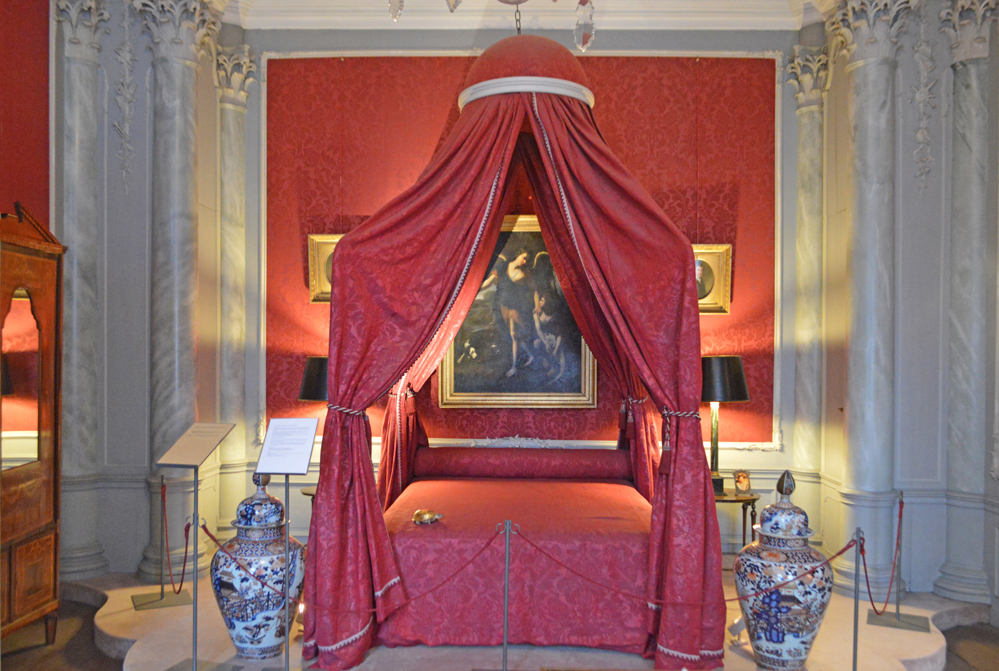
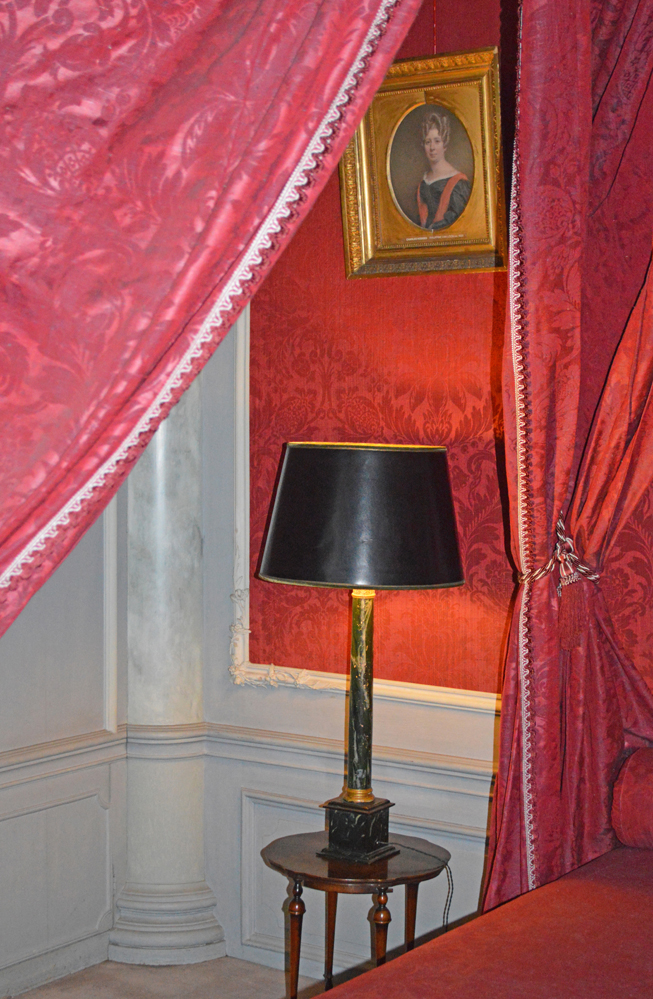
 Charlotte Freemantle and her husband Will Fisher of Jamb London have sailed downstream from Pimlico to create the Primary Bedroom. A fourposter bed dominates the room as befits one of the city’s leading stockists of antiques and makers of exceptional reproduction chimneypieces, lighting and furniture. “The posts are washed in celadon blue to give that sleepy country house feel,” Will tells us. Inspired by the palettes and extravagant drapery of Renaissance and Baroque masters Rembrandt, Domenico Veneziano and Diego Velázquez, they have wrapped the walls in silk rendered in shades of dusky pink. A new pumice black and dove grey Grigio Carnico marble chimneypiece channels period pieces. Very sweet dreams!
 Materiality again plays a central role in the Courtyard bedroom sponsored by American design house Schumacher and designed by British company Veere Grenney Associates. The fourposter is more contemporary in this bedroom: Schumacher damask drapes and checked upholstery linings with matching wall covering provide a restrained tailored feel. A Georgian chimneypiece from Jamb London and contemporary furniture from Veere Grenney’s own collection deliver an eclectic look. The designer admits, “I like to think that we design rooms you want to spend time in.” We don’t want to leave!
 In yet another significant anniversary, Hill House Interiors have launched a capsule collection to celebrate their 25th anniversary. Hill House Lifestyle offers furniture, indoor and outdoor cushions, rugs and trimmings. The pieces are calm, sophisticated and all about the detailing. We join owners Helen Bygraves and Jenny Weiss for lunch in their first floor showroom in the South Dome of the Design Centre. Catering is once again by Social Pantry: we go for harissa baked salmon, bulgar wheat and spring onions. Helen says, “We hope you enjoy our Lifestyle Collection as much as we do.” We do!
 The 20th century Anglo Irish writer Elizabeth Bowen once said of her ancestral residence Bowen’s Court in County Cork, “Indoors and outdoors the house’s character, with its inherent beauty, is in its proportions and its sureness of style.” The same could be said of this show except make it sureness of styles. According to Pulitzer Prize winning author Marilynne Robinson, “Each of us lives intensely within herself or himself, continuously assimilating past and present experience to a narrative and vision that are unique in every case yet profoundly communicable, whence the arts.” A visit to Chelsea Harbour Design Centre is an opportunity to live beyond yourself, embracing the arts – an exclamation mark worthy experience. And to paraphrase the late Queen Elizabeth II, this really is an Annus Mirablis for WOW!house. Tis The Season.




.jpg)