Categories
Architects Hotels Luxury Town Houses

Algodon Mansion Hotel Buenos Aires + Gerhard Heusch

High Flyers Adored 

Thankfully the money’s kept rolling in (and out) so it’s another suitcase in another bedroom. Stretching a rainbow tour of beauty. The art of the possible.

Rest assured, not any old bedroom. Suite dreams in Buenos Aires’ finest hotel. Upscale Recoleta here we come. More than just a little touch of star quality. Don’t cry for us Argentina.

The American writer Waldo Frank evoked the spirit of the city in 1931, “Houses are a chaos and a confusion; Spanish, Creole, Gothic, Baroque, Plateresque, Moorish, Neoclassical, Georgian, Victorian, French of all epochs …” An architectural montage. A thousand stars.

Over 40 years later, local writer Eduardo Crawley would record, “Buenos Aires playacts at being a city that really belongs in the northern hemisphere, and although it somehow drifted to the Southern Atlantic, it’s still attached to its parental body of Europe by an imaginary umbilical cord.” Oh what a circus!

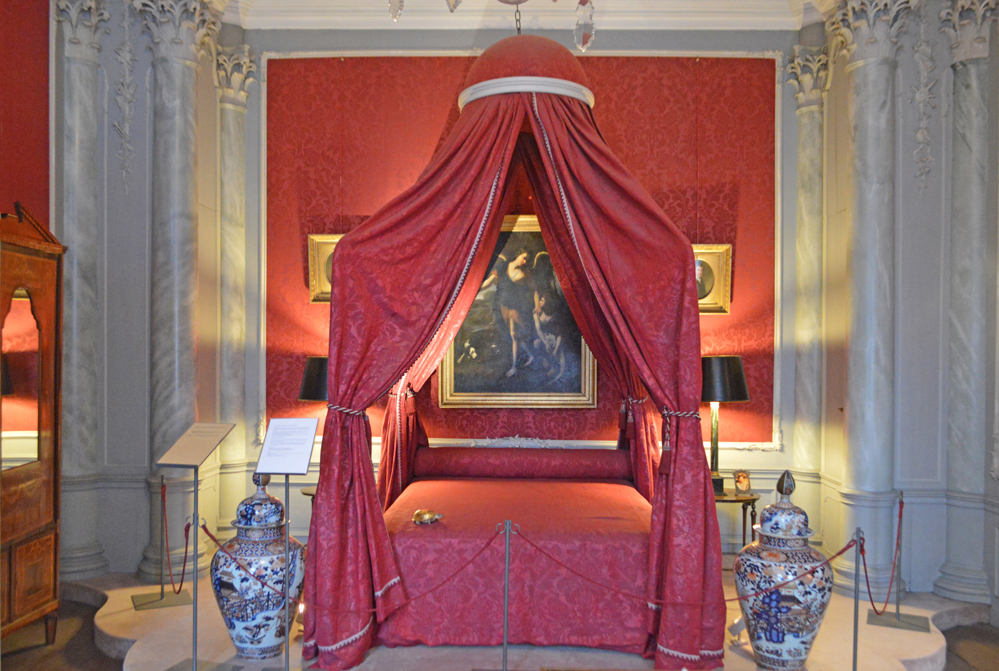
Algodon Mansion fuses French flair with Latin passion and German precision. More Le Grand Trianon than Le Petit Trianon. A luxurious and directional venture, this 1912 landmark has been reimagined by leading German born architect Los Angeles based Gerhard Heusch.

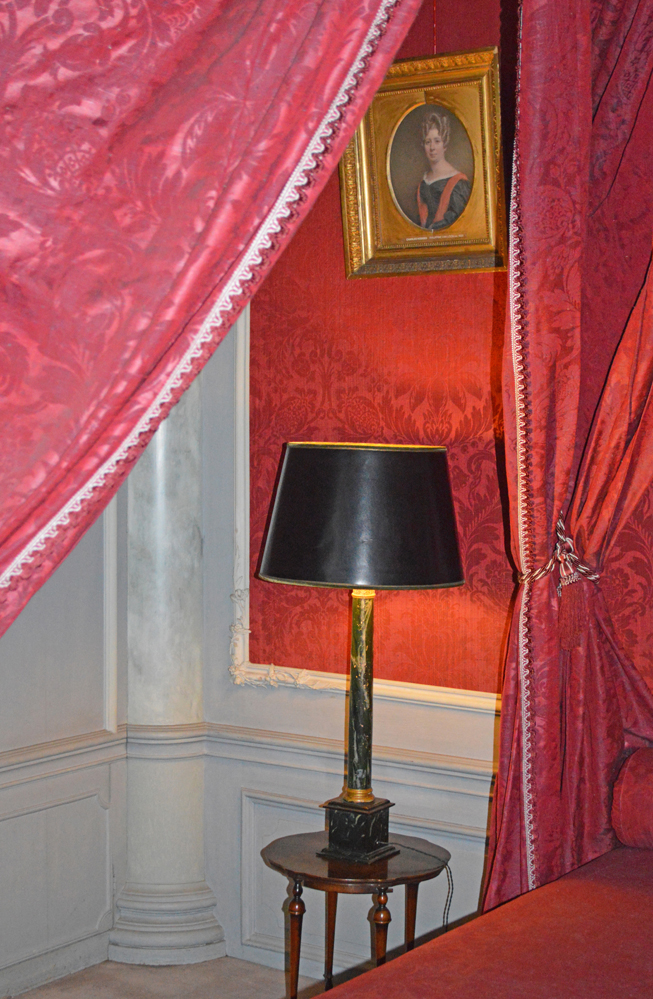
Original grandeur is complemented by a wealth of materials and interventions: walnut parquet; marble tiles; silk wall coverings; taffeta curtains; gold leaf ceilings; alabaster bar. And a waterfall cascading down four watery storeys to the lobby.

A bottle of private collection wine from Algodon’s very own 130 hectare vineyard sits on our writing table. Doesn’t every hotel have a vineyard? Layers of honeycomb are the new canapés.

Time to relax in the rooftop swimming pool, admiring the incidental brutalism of the surrounding skyline. Far below, a brass band marches along Erythrina lined Bougainville filled Guido. La belle époque is back.

Categories
Architecture Town Houses

Lisbon + The Doors

The Passages of Time

Lisbon Doors © Lavender's Blue Stuart Blakley

Lisbon, where even the doors are hot.

Categories
Architecture People Town Houses

Ilchester Place Holland Park London + The Irish Georgian Society London Summer Party

A Narrative of the Time of Nero

Ilchester Place Holland Park © Lavender's Blue Stuart Blakley

The 20th century redevelopment of the leafy Holland Estate has provided London with some of its most sumptuous neo Georgian homes. The style pendulum is in full swing, from Queen Anne meets Lutyens to Queen Mary meets Colonial. Lime tree lined Ilchester Place is firmly in the earlier more academic camp. Completed in 1928, these mainly terraced houses were designed by the Scottish born architect Leonard Martin who lived in a rambling Georgian house which he extended in matching style in Cobham.

Abbottsbury Road © Lavender's Blue Stuart Blakley

There are enough spider’s web fanlights, half moon pediments and squiggly topped blind windows not to mention Dutch gables to make the Irish Georgian Society feel quite at home at Ilchester Place. Just as well, as it was the setting of the London Chapter’s Summer Party. The distinguished hosts were Oric and Julia L’Vov Basirov. Oric is an Anglo Russian archaeologist, historian and Iranologist. His wife Julia is a picture restorer and V+A guide. This locale is steeped in art history, ever since Lord Leighton established his ‘private palace of art’ on Holland Park Road in the late 19th century.

Ilchester Place © Lavender's Blue Stuart Blakley

Sir David Davies, President of the Irish Georgian Society, spoke. Restorer of Abbey Leix House under the guidance of architect John O’Connell, founding Chairman of the Irish Heritage Trust, Harvard alumnus and banker Sir David announced the recipients of recent Irish Georgian Society grants. “Stradbally Hall near my home,” he stated, “is really a ruin. There’s so much work to be done there. We are funding repairs to the chimneystacks.” There was more good news, “We are opening a Chapter in Waterford. We are opening a Chapter in Dallas.” He explained, “I am only the fourth President. My aim is to gather together the different threads of the Irish Georgian Society.” Catering was by Butlers with a capital B. Many of Kensington resident Celia Butler’s staff are artists.

Ilchester Place Sunset © Lavender's Blue Stuart Blakley

Irish Georgian Socierty Garden Party © Lavender's Blue Stuart Blakley

Irish Georgian Society Summer Party © Lavender's Blue Stuart Blakley

Irish Georgian Society London Chapter © Lavender's Blue Stuart Blakley

Categories
Architects Architecture Art Design Luxury People Town Houses

Irish Georgian Society + 20 St James’s Square Westminster London

Adam Fine House

20 St Jame's Square Apse © Lavender's Blue Stuart Blakley

It’s a bit like painting a Siamese twin onto the Mona Lisa. And plonking a hat on her head. That’s what happened in architectural terms more or less (mostly more) at St James’s Square off Pall Mall. Number 20, Robert Adam’s 1770s townhouse was duplicated side on (throwing in an extra middle bay between the two for good measure) and heightened by an attic storey plus mansard thanks to Mewès and Davis in 1936. It looks like the three bay three storey original façade has taken steroids to become a seven bay five storey palazzo. Two faces in Portland stone, both beautiful, one a grisaille. Number 20 is currently a double page thrill in Country Life, sexy images of Adam interiors splashed across a centrefold. Its four bay doppelgänger, Number 21, is 20th century offices. The Irish Georgian Society London Chapter gets a privileged evening sneak peak of 20 St James’s Square before it changes hands.

20 St Jame's Square Overdoor © Lavender's Blue Stuart Blakley

Dr Frances Sands, Catalogue Editor of the Adam Drawings Project at Sir John Soane’s Museum, leads the tour with added artistic insight by Irish Georgian Nick Sheaff. Fran arrives armed with copies of a few of the 8,000 Adam drawings under her management. “It’s very unusual for an Adam townhouse to have been built from scratch,” she says, holding court on the steps. “It was difficult to obtain a plot. This one is generously long and wide for London.” Following the unravelling of an entail – very Downton Abbey – the alliterative Sir Watkins Williams Wynn got his way. He promptly demolished the existing building and employed “the greatest architect of the day”. Fran highlights that “the house hasn’t changed much since the Adam engraving in the Soane. Number 21 is a whole different story…”

20 St Jame's Square Overmantel © Lavender's Blue Stuart Blakley

“We’re going to move around as if we’re guests of Sir Watkins,” Fran announces. Invisible sedan chairs pull up and we’re off. “Every single square inch of the entrance hall is Adam. His hallways should be cool, masculine, stone. Strong colours are Victorian. This scheme is calm, demure, authentic.” Holding court on the stairs, Nick tells us the baronet’s salary was £27,000 a year. Not bad. No wonder he was able to splash out on the “grandest staircase in any London townhouse” according to Fran. “Let’s progress as guests into the first of three first floor reception rooms.” We’re in the ante room: “a rather nice space articulated by resonances of Wedgwood’s jasperware”.

We’re lead through the ante room into the first drawing room but there’s a technical hitch. No lights. The Irish Georgians’ 21st century solution – waving mobile phone torches – allows the Adam splendour to be viewed surprisingly authentically. “This is where we will dance, talk and play cards!” Pointing to the wide shallow chimneypiece in the flickering light, Fran observes “this is deeply reminiscent of the work of Piranesi”. The period gloom soon wears thin. “We’ve languished in the dark quite long enough.” The double doors of the second drawing room are thrown back. “Adam’s interior becomes more and more elegant building to a crescendo at the back of the house!” she exclaims. “The second drawing room is fairly bling – the gilding is later. Aren’t the painted door panels rather wonderful? All this decoration would’ve been ruinously expensive!”

20 St Jame's Square Cove © Lavender's Blue Stuart Blakley

“The ceiling design makes the barrel vault appear heavier,” she remarks. “It alludes to Kenwood’s great library but the barrel vault and apses there are much more depressed. It is a huge misconception that Adam always designed carpets to match his ceilings. There’s often a resonance in the geometry but they generally don’t copy each other.” Great windows closed to the south. “Adam’s rebuilt screen is rather wonderful,” Fran observes, holding court over the yard. “Now we’re going to have an intimate reception in Lady Williams Wynn’s dressing room off the second drawing room. We are very close friends of her ladyship.” This mesmerisingly imaginative tour continues with a health warning about the repro work to the rear of Number 20: “Feel the jar as you step from original Adam to Adam style.” After all this first floor socialising, Dr Sands will lead us downstairs to the eating room and afterwards we will be serenaded by silent harps in the music room.

20 St Jame's Square Serlian Opening © Lavender's Blue Stuart Blakley

  • Interior mood shots: 1/60, F14, 10,000 ISO
Categories
Design Hotels Luxury People Restaurants Town Houses

Comme Chez Soi + Hotel Amigo Brussels

Sprouting Brussels

Hotel Amigo Brussels © Lavender's Blue Stuart BlakleyThere are more painful ways to start the weekend than breakfasting on Sally Clarke’s bread rolls aboard Eurostar. Especially if it is preceded by dining at her eponymous restaurant the night before. Dinner was a set menu held in the intimate private dining room on the (to use estate agents’ speak) lower ground floor of her discreet Kensington Church Street premises. Call it Chatham House Basement. Lucien Freud animal drawings hanging on the walls are a reminder of the late great artist’s fondness for Clarke’s. She’s all about no nonsense good quality English cooking and baking:Comme Chez Soi Brussels © Lavender's Blue Stuart Blakley


Saturday lunch was another pescatarian thrill but that’s where the similarity ends. A change of time zone wasn’t the only difference. Comme Chez Soi on Place Rouppe, a sedate square in lower town Brussels, has a Victor Horta influenced art nouveau dining room accommodating just 36 covers. That hasn’t stopped it gaining two Michelin stars. A family owned restaurant, chef Lionel Rigolet is the fourth generation owner. His wife Laurence explained, “Comme Chez Soi was established by my great grandfather in 1921. It moved to the current building 10 years later. We live behind the restaurant.” Comme Chez Soi celebrates classic French cuisine at its most refined:

Comme Chez Soi Dining Room © Lavender's Blue Stuart Blakley

Comme Chez Soi Dining Table © Lavender's Blue Stuart Blakley

There are greater trials than concluding the weekend at Hotel Amigo, a bread roll’s throw from Brussels’ Grand Place. It is of course the continental flagship of the Rocco Forte chain and is Olga Polizzi’s baby. Keeping it in the family, Olga is television presenter Alex Polizzi’s mother who is Sir Rocco Forte’s niece. It’s hard not to fall in love in a city that has districts called Le Chat, Poxcat and Helmet. Testing endurance, at the end of the day, it’s off to Amigo’s health suite. In the words of Bobbie Houston, co founder of Hillsong, “A mannie, a peddie and a massage cause, gentlemen, that’s what you do when you don’t know what to do.” Comme des Garçons.

Comme Chez Soi Laurence Rigolet © Lavender's Blue Stuart Blakley

Categories
Luxury People Restaurants Town Houses

l’Écrivain Restaurant + Baggot Street Dublin

We Used to Meet on Baggot Street Beside the Old Hotel

Baggot Street Arch @ Lavender's Blue Stuart Blakley

A Michelin starred restaurant named after the French word for ‘The Writer’ is an appropriate choice to hook up with a widely published philosopher. Excuse us! This isn’t a mere tête-à-tête à Terre à Terre. More like the geniuses of the place as a widely acclaimed architect joins us for lunch. Trois grand fromages. l’Écrivain has been on the go for 26 years which in hospitality terms isn’t so much a lifetime as multigenerational (pop ups are so last decade). We enter through an arch, darkly, past a mews bush, and into an oasis of light tranquillity off Baggot Street Lower.

The 16A would pull away and leave that diesel smell | And you’d be standing there by that Baggot Street hotel

Georgian Dublin © Lavender's Blue Stuart Blakley

This street is a glorious survival of 18th century Dublin. It has a special architectural coherence. It is not a planned façade, yet is an architectural entity. It is not merely one damned house after another. Rhythm, proportion, balance, joy. These erections aren’t dripping in pearl necklace string courses; they’re grounded by crown jewel doorcases. Shorn of extravagance, the calm brick elevations contrast with the vitality exploding around each panelled entrance door. The grid is only broken by these regular interruptions of semi rotundity on the piano nobile above the areas. Georgian architecture. Has it been surpassed? No. Does it stand the developer’s value engineering test? Yes. Are we being didactic? Never.

And then that day we made our way down by the Liffeyside | In a bar we had a jar and watched the rain outside

Like London’s Chez Bruce, chef Derry Clarke is still the patron managing a team of chefs rather than a chain figurehead. That hasn’t stopped him penning two bestselling cookbooks and becoming a judge on Irish reality TV series Fáilte Towers (no, seriously). His wife Sallyanne manages front of house. After a sparkling (wine, conversation and sequins) reception in the ground floor bar we ascend to the first floor dining room. It’s a barn-like space for uncluttered minds to while away languid afternoons on banquettes and soft chairs. A Knuttel painting fills the gable end. Geometric glass panels – Mackintosh, Mondrian, Modigliani, Moholy-Nagy mash – diffuse the lavender glow of an early Celtic twilight.

We finished up our pints and we paid the barman’s bill | Walked back up the Liffey in the silence and the chill

Two pan seared scallops with smoked celeriac and pickled samphire (€11.50). Hake with glazed parsnips, velouté of cep mushrooms and salted grapes (€22.50). St Tola goat’s cheese mousse with rye crostini, figs, candied macadamia nuts, aged red wine vinegar and honey dressing (€8.75). Dark chocolate violet and blueberry macaroons (prodigal). Form and content at one: looks good, tastes good. Franco Irish feel good factor on a plate. l’Écrivain – it’s somewhere to write home about.

But still at times when I lie down I’ll dream and start to dance | With the long-gone ghost of Baggot Street | And an echo of romance

l'Ecrivain Restaurant Dublin © Lavender's Blue Stuart Blakley

Categories
Architecture Town Houses

Henrietta Street Dublin + Lavender’s Blue

Writers’ Block

Henrietta Street Dublin © Lavender's Blue Stuart Blakley

Lavender’s Blue, 2015, “It’s a permanent film set, a black and white photograph, a frozen moment in the decline of the Ascendancy – squares of cobwebbed glass blind to the 21st century.”

Henrietta Street Townhouse Dublin © Lavender's Blue Stuart Blakley

Christopher Hussey, Country Life, 1939, “There can be few streets in any city in Europe of such surpassing quality in such a state of decrepitude.”

Maurice Craig, Dublin 1660 to 1860 The Shaping of the City, 1970, “Of so palatial a cast that one easily understands how it remained the most fashionable street in Dublin till the Union, long after many rival centres of social attraction had been created.”

Henrietta Street Doorcase Dublin © Lavender's Blue Stuart Blakley

James Joyce, Dubliners, 1914, “The gaunt spectral mansions in which the old nobility of Dublin had roistered.”

Henrietta Street Railings Dublin © Lavender's Blue Stuart Blakley

Categories
Architecture Luxury People Town Houses

Lady Colefax + Belgrave Square London

 Social Twirl

Belgrave Square © Lavender's Blue Stuart Blakley

More epicurean shenanigans. It’s barely midday in London – but it’s almost midnight in Shanghai. Cakewalk-o’clock. Abstinence makes the heart grow fonder, so we’re off to join fellow sophisticates for a G+T at the O+C. And maybe prawn starter, swordfish main and cold pudding from the trolley. Pall Mall is the new Vauxhall when it comes to clubbing, dress code not Bar Code (yesteryear’s utopia a distant dystopia), house white instead of house music, the dance floor now a marble floor. Eagle eyed viewers will have noticed Jeremy Irons and Sinead Cusack’s son The Travellers Club, a few mahogany doors down from the O+C, was the star of The Riot Club. Non sequitur alert perhaps, but George Orwell is forever spot on: “A duke is a duke, even in exile.” Another epiphanic afternoon imbued with meaning, as passionate as Conor Harrington’s Dance With the Devil, as poignant as Douglas Gordon’s BBW, as enigmatic as Miaz Brothers’ Master #6, as serene as Vespers at Brompton Oratory, as choreographed as The Bling Ring.

The day ain’t over yet. Like social moths fluttering below a dusty light, we’re off to Belgrave Square as guests of the Italian Embassy. To quote Lady Colefax, “We’ve of course slipped back into the ballet, opera, dining whirl which is very pleasant.” Seven-o-clock shadow. The Italians aren’t the only overseas residents to occupy Cubitt’s hallowed 1820s quadrilateral, a paean to pillared neoclassicism. International neighbours include Alderney bankers (Barclay bros), oligarchs (Oleg Deripaska), Qatari royals (Sheikh Jassim) and Dubai head honchos (Sheikh Mohammed). Having the coffers to cough up £60 million over a coffee (cold milk, coloured sugar crystals thanks) on a coffered terraced house is their one thing in common. Quick! Time to absquatulate. Dring dring, dring dring. What would Jacqueline Duncan think? Mrs Duncan to you. “I’m interested in taste,” says the founder of Inchbald. “My school is about philosophy.” At day’s end, before we close the wooden shutters on our stream of consciousness, we reflect on the ostensible realism and symbolist deployment of our structural patchwork. Thank goodness there’s only one shade of Grey Gardens. We twirl.

Categories
Architecture Design Fashion People Town Houses

Recreating Eden Landscape Design + Savannah Georgia

Paradise Found

Antebellum House 1905 © Lavender's Blue Stuart Blakley

Atlanta. Hotlanta. Leave sultry Sunday Funday in balmy Piedmont Park behind. Hop on the next flight out of the capital of Georgia, bumping along over the alligator swamps. Y’all this is the only way to make it from Lavender’s Blue to Savannah blue. Savannah Hilton HEad International: as trim and prim as a spanking new golf resort. Grab a cab and speed along the highway past preened lawns greened by sprinklers and screened by clipped bushes, neat verges and shuttered existences, everything manicured to within a square centimetre of its life.

Savannah Georgia © Lavender's Blue Stuart Blakley

Turn right off the highway. Screech of brakes. Wham bam thank you ma’am! A change of gear literally, historically, metaphorically. A contrast as sharp as the right turn. Do the time warp. Welcome to the urban jungle that is Savannah. The antebellum and great antebellum mansions between pastel washed clapboard townhouses and horse drawn carriages clip clopping along cobbled boulevards fanned  by the river breeze make for picture perfect views framed in 1,000 postcards. Yet it is the lush vegetation above all else, the layer of nature that hangs over and creeps round this genteel city four square, that makes it so special.

Jim Williams Mercer House Savannah 1© Lavender's Blue Stuart Blakley

Spanish moss forms an overhead tapestry of heavy green drapes and swags interwoven with patches of intense blue sky. A pink azalea carpet sweeps across the squares while wisteria climbs up buildings like wallpaper, dogwood blossom providing extra pattern. Ivy acts as leafy borders. Eat at The Lady and Sons, pray at Christ Church compline, love. But this visit was years ago. The immediacy of the past, the distance of the present.

In the noow not the not yet, who better to talk about Southern planting than the owner of Recreating Eden Landscape Design. Former model and cat lover Sandra Jonas has been designing noteworthy landscapes for over two decades. Gardens, parks, historic sites, cemeteries and even Olympic equestrian competition courses have benefitted from her talent. A graduate in Landscape Design from Radcliffe College Cambridge Massachusetts, her award winning work has been celebrated in Atlanta Homes, Better Homes and Gardens, and Southern Living. Sandra’s own garden is a learned essay in four seasons centred on the vistas and verandahs and virtues of Hamilton House, her 1840s antebellum home in Hogansville.

“Some of the most beloved and ubiquitous spring plants in Georgia are the big blousy Southern azaleas, or Rhododendron indica,” Sandra says. “Every spring garden tour is timed for their bloom. They are spectacular. Larger gardens will have at least one Southern magnolia, Magnolia grandiflora, the plant that defines the South. Larger gardens may use these plants as hedging material. They have dense evergreen lustrous foliage and flowers the size of dinner plates with a fragrance that isn’t too sweet or powerful nonetheness.”


Savannah Townhouse © Lavender's Blue Stuart Blakley

Sandra adds, “Then of course there are the camellias which, depending on the variety, bloom from fall to spring. Right now Camellia sasanqua is the star of the garden. The wonderful thing about the climate here is that the gardens planned with care can have plants to delight every month of the year Most historic Southern gardens feature a ‘camellia walk’ leading from the house to the kitchen. The kitchen was located some distance from the house so that a fire wouldn’t destroy the house. These sheltered walks were probably meant to keep the food warm rather than necessarily for the comfort of the slaves who cooked and served it. Usually there would be fig trees and muscadines, wild grapes, that would be made into preserves and wine for winter. As for the gardens I’ve seen in Savannah, they mostly use plants to frame the architecture, which is sensational, and anchor the houses in the landscape.” Tara!Landscape Designer Sandra Jonas @ Lavender's Blue

Categories
Luxury People Town Houses

Lavender’s Blue Opera + Selfridges London

Postcode Lottery 

Opera on the Terrace © Lavender's Blue Stuart Blakley

It’s our anniversary. Time to celebrate. Christmas – with a little help from Selfridges’ luxury handmade Celebration Crackers – came early to Lavender’s Blue. We’re looking fresh for our 100th and not worn out at all by 1,000,000 hits. After 99 articles from Serbian Royalty to British Royalty, Savannah to nirvana, Cristal to crystal, the falls to the Shankill, Royal Mint to polo minted, Edition to limited edition, Masterpiece to masterpieces, Duck + Waffle to our usual waffle, Knights at home to nights abroad, Clive Christian to Christ Church, Goodwood to New Forest, rural Darlings to society darlings, earls to pearls, supermodels to super models, Futurism to the past, we’ve left Home House for home. Party central at Lavender’s Blue.

Lavender's Blue Party Stuart Blakley

Classically trained soprano Sara Llewellyn serenaded us – and half the postcode – to a dream like performance on our courtyard terrace. After earning her Masters with Distinction from the San Fran Conservatory of Music, Sara’s many operatic lead roles include Susanna in The Marriage of Figaro at Berkeley. And yes, she has performed at the Royal Opera House. After jaw dropping renditions of Bach’s Ave Maria, O Mio Babbino Caro and Con Te Partirò, the tempo slowed down and the sun shone for an awe inspiring Summertime. Sara then proved her diversity while testing our moves with I Could Have Danced All Night. Tear jerkers followed with I Dreamed A Dream and You’ll Never Walk Alone. Finally, words and music at the ready, altogether now: the full Team Lavender Cupcake impromptu choir belted out That’s Amore. The whole postcode was entertained to our new take on Dean Martin’s classic. Glyndebourne SW4 had competition.

Morning Opera on the Terrace Lavender's Blue © Stuart Blakley

Categories
Architecture People Restaurants Town Houses

Victor Hugo + Place Les Vosges Paris

French Disconnection 

Place des Voges Paris © Lavender's Blue Stuart Blakley

Everything sounds better in French. But when the Garllic nation attempts English, sometimes all is lost in translation. Take a stroll through Le Marais, try not to smirk as you pass a shop unromantically named ‘I Do Marriage, Be Sweet’ on Rue Beaubourg or ‘Hello, I Love You, Can You Tell Me Your Name?’ on alliterative Boulevard Beaumarchais. Bewildering, dazing, confusing. No lines to learn to forget to read between. Maybe this is where Cecilia Ahern gets inspiration for the titles of her doorstopper potboilers. Stopping a few doors down on Boulevard Beaumarchais, the grammatically challenged ‘Restaurant Loving Hut’ conjures up all sorts of scenarios. An amorous small structure with a fondness for eating places, perhaps? Qu’est-ce que c’est?

Jules Verne Eiffel Tower Restaurant © Lavender's Blue Stuart Blakley

Time to chill in 17th century Place Les Vosges, grab a coffee under the arches at Café Hugo. Everybody’s changing; some places stay the same. Parisians are so friendly. C’est quoi? In the sandy square, children, substitute pets, hang from climbing frames like miserable uncaged monkeys. Better not seen not heard but they’re far enough away. Disconnect. Seats, lovers populate. Paris can’t wait. Tucked away in an unforgotten corner of Place Les Vosges, the apartment where Victor Hugo penned the Hunchback of Notre Dame, rooms wallpapered to within a square inch of their dead lives. He’s gone, the wallpaper’s still there. An empty Edouard Vuillard interior brought to life. No doubt in part thanks to said conquering author, a queue snakes out of la cathédrale, slithering round the statue of Charlemagne. Skedaddle; head for the queueless Saint Gervais et Saint Protais, near yet far from the clueless maddening crowd, hifalutin, lording it above the City Hall. Get a high in a high church in a high church. No usurpers of grace. Experience multiple epiphanies. Peerless chanting fills the nave. As we said, everything sounds better in French.

Castlemacgarrett Claremorris Mayo © Lavender's Blue Stuart Blakley

Categories
Architecture Town Houses

Paris + The Doors

Oat Coat Your

Paris Doors © Stuart Blakley lvbmag.com

Paris, where even the doors are well dressed.

Categories
Architecture Hotels Luxury People Restaurants Town Houses

Mayfair + The Grosvenor Estate London

All That Glitters

1 Mount Street © Stuart Blakley lvbmag.com

“He walked, as was his custom, through the shaded streets and pleasant squares of Mayfair,” writes Michael Arlen in A Young Man Comes to London, 1932. “This corner of town was our hero’s delight. He loved its quiet, its elegance, its evocation of the past. Of Mayfair he wrote those stories which no editor would publish. In those stories he dwelt on the spacious lives of the rich and on the careless gaieties of the privileged.”

2 Mount Street © Stuart Blakley lvbmag.com

Mayfair has long been celebrated in literature, most famously in the 1890s in Oscar Wilde’s An Ideal Husband and Lady Windermere’s Fan. This compact area, north of Piccadilly and west of Hyde Park, a patchwork of streets linking the generous squares of Grosvenor, Hanover and Berkeley, has been developed by several landlords  over the last few centuries, most notably the Grosvenor family. There are four “golden streets” of the Grosvenor Estate in Mayfair and neighbouring Belgravia: Mount Street, Elizabeth Street, Motcomb Street and Pimlico Road.

10 Mount Street © Stuart Blakley lvbmag.com

Mount Street shines the brightest. East to west, it starts opposite Alfred Dunhill off Berkeley Square and ends at Grosvenor House Apartments, Park Lane. The hotel is on the site of the Grosvenor family’s original townhouse or rather town mansion. Edwin Beresford Chancellor records in 1908, “Park Lane is synonymous with worldly riches and fashionable life. Down its entire extent, from where it joins Oxford Street to the point at which it reaches Hamilton Place, great houses jostle each other in bewildering profusion on the eastern side while on the west lies the park with its mass of verdure and, during the season, its kaleidoscopic ever-shifting glow of brilliant colour.” Park Lane is London’s Park Avenue (Manhattan not Bronx).

9 Mount Street © Stuart Blakley lvbmag.com

5 Mount Street © Stuart Blakley lvbmag.com

Between the classical Protestant Grosvenor Chapel on South Audley Street and the Catholic Church of the Immaculate Conception, known to all and sundry as “Farm Street” after its address, lie Mount Street Gardens. First laid out in 1890 on the site of a former burial ground, the gardens are now a sanctuary for locals, travellers and wildlife. Native London Plane trees grow between a more exotic Canary Island Palm and Australian Mimosa in this sheltered oasis.

7 Mount Street © Stuart Blakley lvbmag.com

Close to where Mount Street meets South Audley Street is the Mayfair Gallery. A treasure trove of furniture, lighting, paintings, sculpture and objets d’art, it was founded by Iranian born Mati Sinai who has dealt in antiques since the 70s. “Mayfair was and still is the premier location in London from which to exhibit and sell some of the pieces we have acquired over the years,” he says. “There is a peaceful serenity to the area.” His two sons Jamie and Daniel have joined the family business. “Once upon a time,” Mati says, “90 percent of our sales went to Japan and the US. Whilst we do still get customers from those regions, the growth of Russia, the Middle East and now China has radically changed our business.” A pair of vast vases commissioned by Tsar Nicholas I stand proudly in the shop front. The streets may not literally be paved with gold, but even on the outside of the red brick buildings are blue and white ceramic vases set in terracotta niches.

Mayfair has always attracted the rich and famous. Chesterfield Street alone boasts three blue plaques marking the homes of former Prime Minister Anthony Eden, playwright William Somerset Maugham and dandy Beau Brummell. The Queen was born in Mayfair, 17 Bruton Street to be precise. A Michelin starred Cantonese restaurant called Hakkasan is now at that address. Sketch on nearby Conduit Street is such a fusion of art, music and food that it is an installation itself. Art curator Clea Irving says, “Mayfair has a high concentration of artistically minded people – architects, artists, fashion designers, gallerists.” The fine dining restaurant at Sketch has two Michelin Stars.

4 Mount Street © Stuart Blakley lvbmag.com

A property budget of £1 million will at best stretch to a studio flat in this “golden postcode”. Established over 30 years ago, Peter Wetherell’s eponymous estate agency is on Mount Street. “Wetherell recognises that people from around the world seek Mayfair’s finest properties,” he says.  A few doors down, 78 Mount Street has just been sold by Wetherell for £32 million. This corner mansion, originally built for Lord Windsor in 1896, has five reception rooms, nine bedrooms and nine bathrooms spread over six floors. An international influence is evident in its architecture, from French neoclassicism to Italian Renaissance and English Arts and Crafts. Two of Osbert Lancaster’s architectural idioms originate in Mayfair: “Curzon Street Baroque” and “Park Lane Residential”. Another two could easily be “International Eclecticism” and “Grosvenor Grandeur”.

3 Mount Street © Stuart Blakley lvbmag.com

Categories
Design Luxury People Town Houses

Peter Sheppard + Smallbone Kitchens Brasserie Range

Range in the Home

1 Peter Sheppard's Smallbone Brasserie Kitchen © lvbmag.com

Where better for Smallbone of Devices to launch its new range than the kitchen designers’ very own home? And where better to dwell than the converted Friary of St Francis, a brogue’s shuffle from Westminster Cathedral? The building was designed in 1884 by Henry Astley Darbishire, Peabody Trust’s trusted architect. His flats on nearby Pimlico Road form a rambunctious High Victorian yellow brick hallelujah to piety. They rise above quotidian stockists: Semmalina toys; Ramsay art, Tomasz Starzewski fashion; La Poule au Pot wine dining; Wild at Heart flowers; Michael Reeves furnishings; Gordon Watson antiques; Gallery 25 antiques; Moloh fashion; Luke Irwin art; more Luke Irwin art; Langston antiques. Living over the shop has never been so glam. Oh. Em. Gee. The former friary elevates philanthropic grandeur to a whole new level: a four storey loggia lined Romanesque palazzo of patronage.

The reports of the death of fine dining are greatly exaggerated. Eating out hasn’t quite cataclysmically descended from fish knives to fishwives. More like a move from blue blood to blue jeans. Out formality; informality. Chris Corbin and Jeremy King are the pioneers of creating dress down town restaurants with an uptown social scene. Meritocracy over aristocracy. Michel Roux’s La Gavroche and Gordon Ramsay’s Pétrus may still be serving haute cuisine at triple the price and triple the waiter-to-customer ratio, but the brasserie scene dominates now in London. Fine dining is niche, not norm. Even the famously conservative Marcus Wareing has binned the white linen tablecloths at his fine dining restaurant in the Berkeley Hotel. He’s replaced the late David Collins’ interior with “free and easy dining accompanied by American style service”. Peter Sheppard who along with Keith Day designs for Smallbone observes, “Restaurant style creeps into homes.”

Ever since its seminal 1970s Pine Farmhouse Range, Smallbone has been setting kitchen trends. In the 80s came Hand Painted and then in the 90s, when everyone else was busy doing fitted, came Unfitted. This trailblazing salute to Charles Jencks’ postmodernism introduced freestanding furniture, stoves, larder cupboards and the singular kitchen island. “Fitted kitchens first became popular in the 1950s,” relates Peter. “The Brasserie Range continues the move away from fitted kitchens. It’s influenced by the 30s, based around the needs of the family. A place to cook and chat. The starting point was an oversized dresser in a French bistro we frequent. It adds to the relaxed Provençal ambiance. We’ve adapted the dresser, adding sliding glass doors, an integrated worktop and back painted open shelving.”

Peter Sheppard's Smallbone Brasserie Kitchen lvbmag.com

Characterful strips of knotty oak contrast with nickel plated saucepan style drawer handles. Plain cornices and skirting boards are finished with a slip of brushed stainless steel. It’s versatility, though, that defines this range. The traditional plate rack has been updated to hold glasses under it. The ceiling rack now has a wraparound shelf. Below the sink unit is a slatted ledge for Keith and Peter’s pug, Chanel. St Francis is not just here in spirit. A bronze statue of the patron saint of animals is on the wall outside. As for the kitchen island, that’s so last century. Smallbone’s Brasserie Range has three islands of varying size. The kitchen archipelago.

Peter Sheppard's Smallbone Brasserie Kitchen © lvbmag.com

Categories
Architecture People Restaurants Town Houses

Jean-Christophe Novelli + Home House London

London’s Most Exclusive Restaurant

1 Jean-Christophe Novelli & Stuart Blakley @ Home House © lvbmag.com

Ding dong. It’s Lavender’s Blue’s Christmas lunch. Where to, where to? Our second stately home, of course. Homely Home House. Anthony Blunt’s former home; raffish types clearly in the past. Home is where the heart is and the heart of Home House is the hearty Robert Adam Dining Room. Grisailled and scaglioled to the nines (and that’s just the room), domestic god and sensation in the kitchen Jean-Christophe Novelli is our chef and host. Table for two for noon, thank you. That all important staff-to-customer ratio is pretty high due to the maître d’, Prosecco sommelier, Limestone Coast Chardonnay 2013 sommelier and Scottish Natural Sparkling Water waiter all standing to attention.

2 Jean-Christophe Novelli & Stuart Blakley @ Home House © lvbmag.com

“I miss the urgency of a restaurant,” says Jean. “And there’s nothing quite like the immediacy of a pop-up!” These days he’s busy running his cookery school and chef’s academy in Herts. That is, when he’s not creating a bespoke fine dining experience for us amidst ovaloid apses, ellipses and lunettes. Dial is its name, top of its game, a play on a well known supermarket’s fame. A fandango in fondue, perhaps?

3 Jean-Christophe Novelli & Stuart Blakley @ Home House © lvbmag.com

4 Jean-Christophe Novelli & Stuart Blakley @ Home House © lvbmag.com

5 Jean-Christophe Novelli & Stuart Blakley @ Home House © lvbmag.com

First up is a verrine of avocado mousse and lobster tail with Melba toast. Divine. Dame M would approve. Next, seared scallops with chestnut velouté, maple syrup, apple and spinach. Heavenly. In more-or-less pescatarian form, we skip the venison steak with red cabbage, roast parsnip, sautéed sprouts and chestnuts sweetened by Moser Roth dark chocolate sauce. Straight to Black Forest stollen butter pudding. Devilish.

6 Jean-Christophe Novelli & Stuart Blakley @ Home House © lvbmag.com

Jean was given free rein with the menu. “Quality of ingredients, freshness, simplicity,” Jean says. “These are all important. But so is – how do you say it? L’huile de coude. Ah – oil in the elbow!” He’s off to Dublin next week. “Probably one of the few places I am greeted by crowds at the airport. I love it! I get the best reception there. I’ll be on the Late Lunch Live television programme.” So much did our early Christmas lunch cost? The ingredients, thanks to some judicious shopping by our Michelin starred chef at the well known supermarket, £17.90. And we even forgot to mention the coffee and mince pies. The experience? Priceless. Merrily on high.

7 Jean-Christophe Novelli & Stuart Blakley @ Home House © lvbmag.com

Categories
People Town Houses

Ely House Dublin + The Order of the Knights of St Columbanus

Bram’s Lullaby

1 Ely House Dublin © lvbmag.com

Lavender’s Blue visit one of Dublin’s grandest and most historic houses. Following a herculean £5 million restoration, Ely House has never looked better, adapted and ready for its fourth century of continuous use. Now that’s what we call sustainable development. Back in 1771 when the house was built, Dublin’s population had quadrupled in a matter of decades making it the seventh largest city in Europe. Still smaller than the modern day London Borough of Wandsworth. The Wide Streets Commission of 1757 paved the road (no pun) for the development of streets and squares. Now that’s what we call town planning. Building leases on plots dictated height, mostly four storeys over basement, and often even each storey height. A pleasing uniformity was the outcome.

2 Ely House Dublin © lvbmag.com

Exteriors are typically devoid of ornament, relying on quality of brick and pleasing proportion of wall-to-window ratios for their beauty. Except of course for what have become known as the famous Dublin doors. Extraordinary zest was invested into creating eye catching arrangements of heavily panelled doors, lead paned sidelights and semicircular fanlights. Wrought iron railings and balconies are the only other relieving features. This architectural restraint makes the explosion of exuberant interior plasterwork all the more stimulating. And if you think the recent boom was party time, it doesn’t hold a (Georgian) candle to the shenanigans our bewigged predecessors got up to in these ornate settings.

3 Ely House Dublin © lvbmag.com

Chronicler Mrs Delaney, the Lavender’s Blue of her day, recorded one of her meals, “First Course: soup, rabbits and onions, veal, turkey pout, salmon grilde [sic]. Second Course: pickled salmon, quails, little terrene peas, cream, mushrooms, apple pye [sic], crab, leveret, cheese cake. Dessert: blancmange, cherries, Dutch cheese, raspberries and creams, sweetmeats and jelly, strawberries and cream, almond cream, currants, gooseberries and orange butter,” [sick]. Potatoes are not mentioned because they were not considered part of a set ‘dish’; they were handed round. Vast quantities of wine, chiefly claret but also port, accompanied the food. In The Four Georges, Thackeray writes, “Singing after dinner and supper was the universal fashion of the day. You may fancy all the dining rooms sounding with choruses, some ribald, some harmless, but all occasioning the consumption of a prodigious deal of fermented liquor.”

4 Ely House Dublin © lvbmag.com

Built by Henry Loftus, Earl of Ely, Ely House on Ely Place opposite Ely Wine Bar faces down Hume Street towards St Stephen’s Green. It spans the full width of Hume Street and true to form is four storeys over basement with particularly elegant wrought iron railings, balconies and even lamp standards. A parapet partly conceals the roof. But where most Georgian Dublin houses are three bay, Ely House is a full gloriously greedy seven. Red brick from Bridgewater, Somerset, was an inspired choice of material. The Loftus family seat was Rathfarnham Castle, south of Dublin city centre. Their townhouse, or rather town-mansion, was a fulcrum of 18th century social life. Michael Stapleton, the fashionable stuccadore, was commissioned to undertake the interior plasterwork.

5 Ely House Dublin © lvbmag.com

6 Ely House Dublin © lvbmag.com

Stucco acanthus fronds, acorns, arrows, bay leaves, bows, brackets, cherubs, consoles, corbels, cornices, festoons, friezes, helmets, medallions, panels, plaques, putti, quadrants, quatrefoils, ribbons, roses, rosettes, scrolls, shells, swags and two turtle doves await us. There are more fireplaces than the Lassco Summer Sale. Cararra marble, Sienna marble, oak, take your pick. In fact somebody nearly did. Just before we arrived a wannabe thief tried to make off with one. Both outside and in, Ely House is a template of grand Georgian design and layout. Beyond the Doric Palladian doorcase is a squarish outer hall. Sedan chairs would once have been parked on the stone flagged floor. A dentilled cornice is a subtle hint of the plasterwork to come. On one side of the outer hall, the morning room, now an oratory, is equally serene with windows overlooking Ely Place. But on the other side, the dining room shows Stapleton in full flow. As the panelled window shutters are pulled back, the soft Irish light casts shadows across the moulded walls and ceilings in all their glory. The dining room is painted Mount Panther blue, highlighting Stapleton’s three dimensional wonders.

7 Ely House Dublin @ lvbmag.com

Straight ahead of the entrance door, the outer hall leads into the inner hall; what a spectacle! Behold Dublin’s finest staircase, raising the functional to the fantastical. Here is the first clue, all six feet of it, that Stapleton or possibly Loftus was a fan of ancient classical mythology. A statue of Hercules, carved out of the same Portland stone as the three flights of stairs, acts as a human sized newel post. Under a mahogany handrail and below small lead medallions and squiggles, groupings of plant-like wrought iron balusters alternate with giltwood figures representing the Labours of Hercules. In ascending order are the Erymanthian boar; the Stymphalian bird; the Nemean lion; another Stymphalian bird; the Cretan bull; the Arcadian stag; and the three headed dog Cerberus. The staircase basks in natural light from a Palladian window framed by Corinthian pilasters. An obligatory secondary staircase, connecting the basement to the top floor and all levels between, is a marvellous counterfoil to the main staircase. It’s an essay in refined understatement with plain timber balusters.

8 Ely House Dublin © lvbmag.com

The first floor is laid out with typical 18th century taste. An enfilade along the front of the house is formed by a reception room on either side of an anteroom. In this instance the anteroom is a single bay music room. One of the decorative plasterwork roundels on the wall is hollow to improve acoustics. The Pillar Room was once known as the Attic Theatre. This space was created by the Earl’s widow. When Henry Loftus died in 1783 his young widow, the girl about town Dowager Countess, threw together two rooms to make a theatre. Ionic columns and pilasters support the ceiling of the enlarged space. The muted colours of the drawing room allow the plasterwork to do the talking. Romulus and Remus appear with the wolf in the central marble relief of the mantelpiece.

9 Ely House Dublin © lvbmag.com

Ely House was the home of Sir William Thornley Stoker from 1890 to 1911. His brother Abraham (Bram) Stoker was author of Dracula. Since the 1920s the house has been the headquarters of the Order of the Knights of St Columbanus. This Order was founded in Belfast by James K O’Neill to promote Catholic faith and education. His experience as the priest of an inner city parish led him to believe that intelligently applied Catholic principles would remedy social ills and permeate society with the charity of Christ. This was the basis of the programme of study which continues to underpin the Knights’ endeavours. Canon O’Neill died in 1922. Mid 20th century offices built in the rear garden provide a source of income for the Order. It’s not many buildings that over the course of their history have housed a raucous aristocrat, religious order, a Thai restaurant (the previous use of the Knights’ members’ room in the basement) and hosted a gothic horror writer. Now that’s what we call provenance.

10 Ely House Dublin © lvbmag.com

Categories
Architecture Design Restaurants Town Houses

Savannah Tour of Homes + Gardens

Midday in the Garden of Good and Evil 

1 Savannah Tour of Homes © lvbmag.com

Savannah may be famed for its St Patrick’s Day revelry, the second largest in the US, but hot on its heels every year comes another celebration: Savannah Tour of Homes and Gardens. Presented by (breathe in) The Women of Christ Church and Historic Savannah Foundation in cooperation with Ardsley Park Chatham Crescent Garden Club (breathe out), this venerable tradition has been a highlight of the city’s calendar for more than three quarters of a century.

2 Savannah Tour of Homes © lvbmag.com

Each year, a selection of Savannah’s finest residences is featured on the tour. It’s quite a status symbol to have your home included. Crowds make their way across the city’s famous squares which mostly aren’t as large as you might think. More Soho Square than St Stephen’s Green. Like everything in Savannah, half the fun is meeting the people. Earlier in the day we got talking to the table next to us in Café Scad. “Eliza Thompson Inn,” we responded when asked where we were staying. “Ah – it’s haunted! Eliza? She’ll make ya dance!”

3 Savannah Tour of Homes © lvbmag.com

The formidable Women of Christ Church were no exception, revelling in their role as guides alongside the indomitable maîtresses de maison. “Y’all, we tell everyone that’s Vivienne Leigh’s grandmother!” exclaimed one, pointing to the portrait of a feisty brunette over the fireplace. “We’ve no idea who she really is!” Many of the homes were ideal for one way circular pedestrian flow thanks to steps leading up to an entrance door on the piano nobile and a secondary exit at street level. Woe betide anyone who walked across a manicured lawn. Or tried to skip a room on the heavily policed circuits. We accidentally – honestly – missed a front parlour. We were instantly summonsed back: “Y’all get back inside ya little lawbreakers!” Meek obedience seemed like the safest response, stopping to purposefully admire the oh-so-perfectly arranged Fabergé dinner set en route.

Every interior style – House and Garden, Period Living, Wallpaper*, World of Interiors – was represented. Behind one of the shuttered antebellum exteriors was a gallery of Jeff Koons sculptures. A colonial façade gave way to enough Beidermeier to stock a small museum. “A palm tree growing in a dust bin,” announced an august guide with a straight-as-a-poker face. “Just a typical teenager’s room.” A few doors down, an exquisitely apparelled hostess whisked us into her house with a powerful sweep of her modestly white gloved hand. “Welcome to the grandest house on East Jones Street!”

4 Savannah Tour of Homes © lvbmag.com

“I’ve painted the front door red,” stated another. “What’s the significance of red?” she demanded. “Eh, danger?” we gingerly suggested. “No, why no, it’s for Southern hospitality!” and swiftly guided us onto the pavement. With that in mind, we headed off into the afternoon sunshine for some grits and shrimps on Monterey Square, washed down with iced margaritas. Dinner – Cajun blend of crawfish at Alligator Soul or crab stuffed Portobello at Paula Deen’s The Lady and Sons? First world problem.

5 Savannah Tour of Homes © lvbmag.com

Categories
Architecture Art Design Developers Town Houses

Audi + Urban Future Award Istanbul

Turkish Delights

And the winner is… The Audi Urban Future Award 2012 ceremony was held with great aplomb in Istanbul amidst the frenzy of its first Design Biennale. A Champagne fuelled boat party breezily sailed past the Sultan Ahmed Mosque and Ottoman palaces, glistening in the last days of summer; past the cliff faces of flats clinging onto narrow streets with lingering cats on every corner, resplendent in the heat; en route to a manmade island on the Bosphorus. Architecture’s answer to the Oscars, Audi knows how to throw a party.

Earlier on dry land, Lavender’s Blue enjoyed the Adhocracy exhibition of the Istanbul Biennale. Curated by Milan based architect and Domus editor in chief Joseph Grima, it was held in the historic Galata Greek School.  Adhocracy celebrated the move from bureaucracy to innovation. An emphasis of process over product was another theme. Oh brave new world! Our favourite of the 60 projects was a model of an oh so contemporary villa. A pure distillation of Manser meets Meier. So relevant. So now. Who’s the architect? Some young Turk from the Golden Horn who knows his Golden Ratio?

Er, no. It’s a 1:333 scale remake of self taught Italian architect Giancarlo de Carlo’s villa for the Villaggio Matteotti exhibition. Dated 1970. “Architecture is too important to leave to the architects,” he once quipped. “Thus with the rise of middle class professionalism, architecture was driven into the realm of specialisation, where only the problems of ‘how’ were relevant, as the problems of ‘why’ were assumed to have been resolved once and for all.”  Process versus product again. De Carlo cites the Hagia Sophia in Istanbul as one of only a few buildings which possess perfect elegance and the power to enthral everybody.

Back to the party. Five hipper than thou architectural practices were invited to compete for the prestigious €100,000 prize. Each represented their home megalopolis. A 2030 vision (2020 vision plus 10?) or urban mobility anchored in its locale yet capable of global application set the scene.

Each of the architects examined mobility as a broad spectrum embracing not just transportation and accessibility but also connectivity, energy, the environment and economics. The brief included the role of the car in wider urban mobility.

Audi Urban Future Initiative, a powerhouse of thinking on future mobility, was launched in 2010. It aims to influence the transition towards a new era of mobility. A multifaceted programme establishes the dialogue between the interconnectedness of mobility, architecture and urban development. The Audi Urban Future Award, one of the Initiative’s facets, addresses a pivotal period in the evolution of the 21st century metropolis. The next 18 years – a time for cities to grow and grow up.

The goal of the 2012 Award is to stimulate the development of proposals that identify opportunities for sustainable transformative interventions in each of the five metropolises. A wide range of questions are addressed. What kinds of paradigm shifts need to take place? Who or what drives change? What technological innovations will play a role? How can existing infrastructure be adapted to a rapidly evolving urbanscape? What new infrastructure needs to be designed to increase sustainability?

In no particular order (to borrow the X Factor phrase), CRIT prepared a concept for Mumbai; Node Architecture + Urbanism represented the Pearl River Delta; Höweler + Yoon Architecture, Boswash (aka Boston to Washington); Urban Think Tank, São Paulo; and Superpool were at home flying the Ayyildiz for Istanbul.

The architects’ Vorsprung durch Technik was as dynamic as the new Audi A8. Coordinated human interaction maintains the economic miracle of Mumbai. Pearl River Delta is deconstructed and reconstructed. In Boswash the American dream is reinvented. São Paulo dances to the rhythm of newfound energy. Citizens reclaim the streets in Istanbul.

Despite the disparity of the five regions, common threads emerge. Space is an extremely scarce resource in megacities. The automobile must be adapted to deal with it efficiently. As housing becomes more expensive, sharing transport economically gains appeal. Seamless intermodal mobility is the sustainable future.

Lights, cameras, action! Americans Höweler + Yoon scooped the prize. Their ambitious architecture and planning idea ‘Shareway’, revolutionising the commute, won over the hearts and minds of the jury. At its core is a merging of private and public transport by a mobility platform. This holistically combines existing infrastructure with intelligent traffic flows and networks.

A new social consensus is heralded. A community focus takes priority over individual ownership. It means reorganising and integrating all modes of transport, yes even the Audi (or any other car), in an optimised high technology constantly flowing mobility aorta. The ‘Bundle’ is born. Over three million people can be connected between the ‘burbs and the ‘bright lights’ via the Bundle.

A superhub located in Newark, New Jersey, displaces New York City as the capital of Boswash. Prepare for the battle of the housewives. Prada handbags at dawn. Even more fundamentally in a material world, ownership is traded for sharing. Höweler + Yoon’s new American Dream is of freedom and opportunity. Urban shape is transformed and access to mobility is the ultimate metric of city living.

Urban theorist John Thackara, chair of the interdisciplinary jury of the Audi Urban Future Award 2012, explains the choice of winner. “In our view Höweler + Yoon implemented the task most concretely. They included a high potential for implementation of ideas, at least in part, and in the competitive set timescale to 2030. The jury appreciated the thorough analysis of the social and economic context. Their concept includes both social and technical innovation on a system wide level. The jury was also impressed by the architectural quality of the implementation.”

The car shaped the city. Now it’s the turn of the city to shape the car. Corbu’s machine for living has gone mobile (Vers Une Architecture est maintenant Vers la Mode de Vie). Over to the winners for the last words: “This has been a privilege and an incredible journey. Research in our own backyard! The issues are bigger than architecture. This initiative has the potential to actually move forward with realistic ideas discourse between city planning, architecture and automotive technology. All these factors are important for a deeper understanding of design.”

Categories
Architecture Design Developers Luxury Town Houses

Morpheus + The Chelsea Townhouses London

Metamorphosis

Morpheus. In Greek mythology he is the god of dreams. In modern day London he is the deliverer of über high end homes. The fulfiller of dreams. The face of Morpheus is dashing developer Andrew Murray. More anon. A forgotten site in a memorable mews is the latest location. The Chelsea Townhouses, just three of them, are each a mesomorph in mortar and marble composite.

Viewed along mutually perpendicular radii, the concertinas of the finned (to the front) and buttressed (to the back) elevations unfold in anamorphic monochrome. The triumphant triumvirate of light surface, shadowy void and dark glazing is as precisely incised as an Erhard Schön woodcut puzzle. Strips of vertical garden clinging to the rear buttresses provide light green relief.

This art of delaying access to deeper meaning is both metaphorical and physical. The Chelsea Townhouses are four up, two down. Their true verticality remains unrevealed by the delineated modernity of the façade. Two concealed levels lie below street level. Beyond the entrance doors, an airy expanse of lateral living comes as a visual and experiential surprise.

Garages are an integral part of the building envelope. “These houses are real ‘lock ups’,” explains Andrew. “You can drive straight into the garage, step into the lift, walk out of the lobby and you’re home. They’re incredibly secure.” When you’re not at home, Morpheus’ Residential Management Team cleans, carries out security checks, sets up floral arrangements in the first floor reception suite, and a Harvey Nics hamper in the double height kitchen will await you on your return.

This quintessentially upper crust concierge service is included in the purchase price (a snip at £10 million) for the first year. When you are at home, a sommelier will attend to parties while food rises up to the dining room on a mirrored servery, “London’s largest dumb waiter!” Andrew’s words.

Morpheus selected guest designers 1508 London to decorate the 900 square metres interior of the middle house. “We commissioned English designers and craftsmen for much of the furniture,” relates Andrew. “Herringbone and checked tailoring, Fromental wallpaper and Jura blue grey limestone present typical British understatement. Patinato Veneziano polished plaster and brass trimming add a touch of international glamour. Nothing is off the shelf. Everything is handmade.”

A cantilevered staircase resting on open risers with a glazed banister floats effortlessly upwards like a lightweight glacial artery. Andrew refers to it as the “natural flow”. He reckons the first floor winter garden has the best of both worlds, revelling in both display and privacy. This could be a metaphor for the house as a whole. The upper levels are filled with natural light and are used for entertaining: display. The ambiance changes on the lower levels to a duskier clubby feel: privacy. An acoustically panelled cinema and snug family room provide the ultimate underworld sanctuary.

In later Greek mythological writings, Morpheus morphs into the god of sleep. And so to bed. One of four bedrooms, the master suite occupies the whole of the top floor. To the front is the bathroom. A strip of windows facing onto a landscaped roof lights the swathing of bookended Italian marble. To the back, a roof terrace is accessed off the silk carpeted bedroom.

Over the last two decades in business, Andrew has witnessed the metamorphosis of London into the most desirable address in this world. “Demand is through the roof,” he observes. “The capital has one helluva lot of attractions, from culture – where else are museums free? – to a convenient time zone, generous tax structure, political stability, security of legal ownership and education.” Plus heavenly houses fit for the gods like The Chelsea Townhouses.

Categories
Art Design Developers People Town Houses

Keizersgracht + Museum van Loon Amsterdam

Double Dutch

A myriad of canals provides Amsterdam with such a quantity of mirrors that narcissism becomes inevitable. Reflected every moment by thousands of square metres of rippling silver amalgam, it’s as if the city is constantly being filmed by its water. Consequently each canalside building lends the impression of existing as an egotist solely preoccupied by its appearance. And each canal’s own vanity is to reflect the lights dangling under the bridge arches. They, in turn, appear as shimmering pearl necklaces.

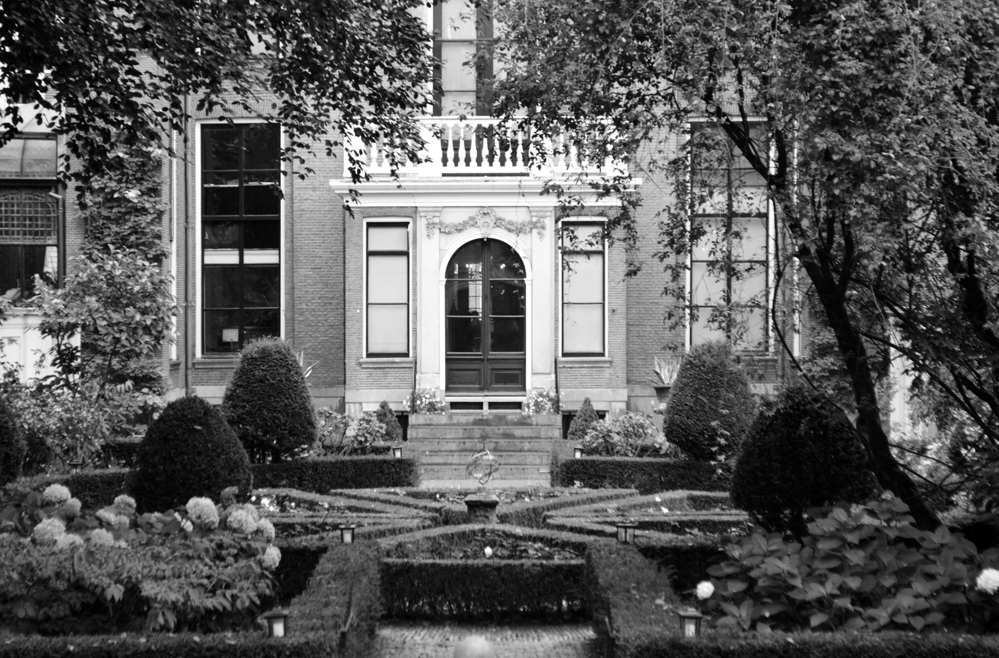
Last winter, a heavy veil of snow hung over the city. Along Keizersgracht, one of the three original canals, cars morphed into white mounds and overhead wires dripped with crystals of ice. Snow on snow on snow. Assuming you’ve recycled your Moët & Chandon bottles at De Appel Arts Centre, tackled the Rijksmuseum, skipped the queue at the Stedelijk Extension and ruminated at the Van Gogh, something of altogether more domestic proportions yet distilling elements of all three is 672 Keizersgracht. Enter Museum van Loon.

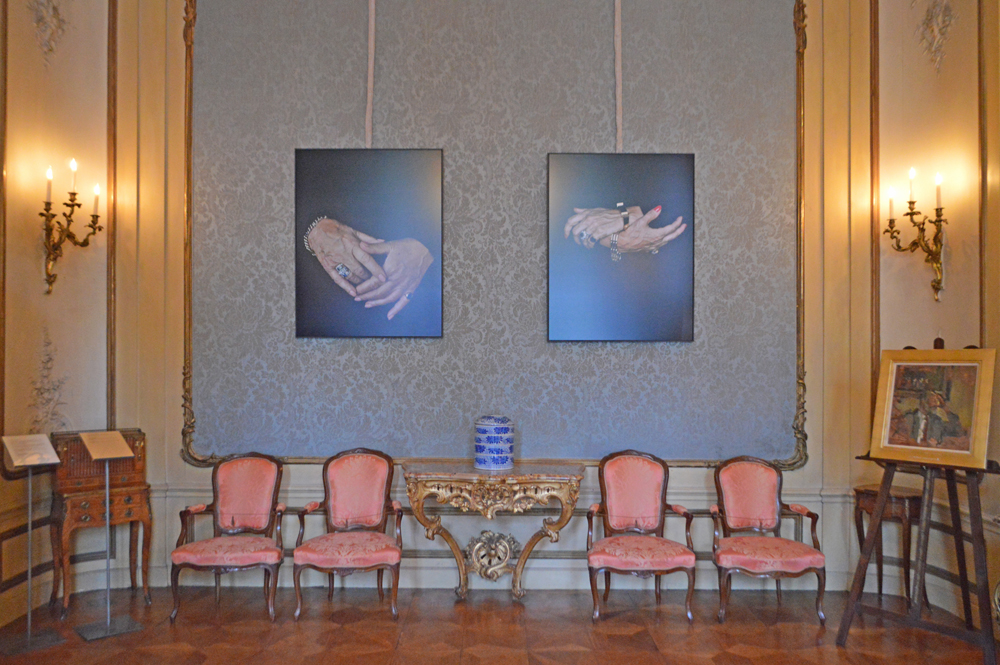
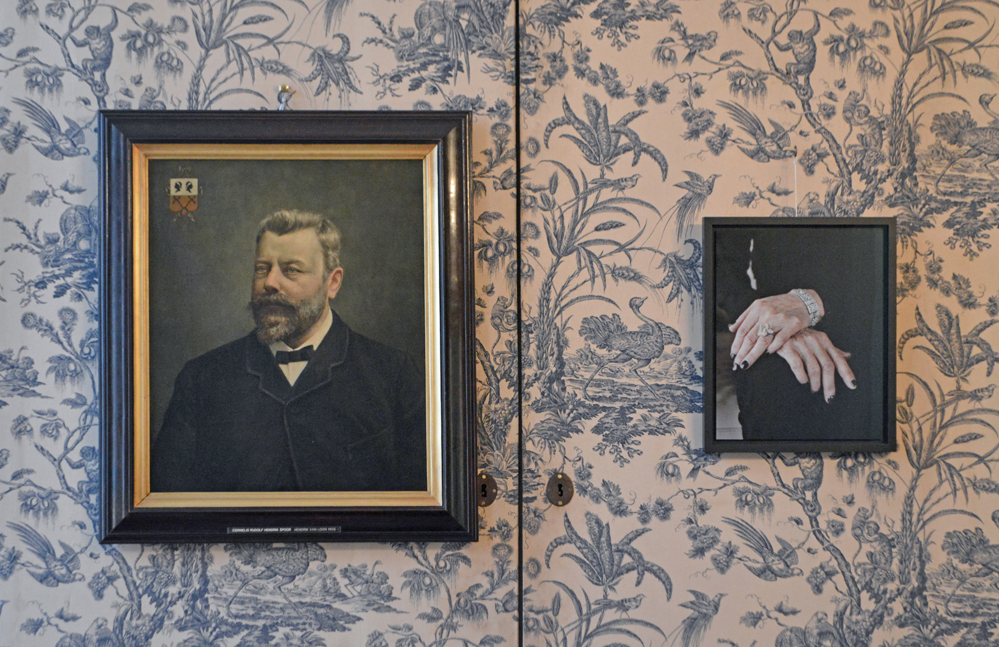
Furniture fans will get a Louis the Hooey eyeful; antiques lovers can ogle at porcelain collections spanning three centuries; while integrated contemporary art featuring the likes of light boxes by Danielle van Ark and photographs of Juliette Lewis add an experimental twist to the mix.

“The van Loon family has frozen the house exactly as it was when it opened in 1973,” announces the surprisingly youthful Museum Director and Curator, Tonko Grever. Well that puts paid to any John Fowler type debate over which period should take prominence. “As a result priceless pieces sit next to modern miscellanea. It’s still considered unusual in Amsterdam to open your house to the public,” reveals Tonko. “Maurits van Loon was the last surviving male of the family.” He died in 2005 aged 83. The first van Loons to live here were Willem and his wife Thora. His ancestor, another Willem, was one of the founders of the Dutch East India Company.

“The former butler’s son called by the house a while back,” says Tonko. “He couldn’t believe Mr van Loon just lived in an apartment on the top two floors. I reminded him that a private pad in this part of town, away from the neon nightmare that is Damrak, is still quite a status symbol! Plus it’s pretty big by modern standards.” A handful of staff runs the house now in place of 10 to 15 servants.

Narrow dizzyingly steep vertigo inducing stairs are an all too common feature of Amsterdam houses. Not here. Dr Abraham van Hagen, newly married to the metaphorically monikered Catharina Trip, an American heiress, proved he’d a flair for fabulousness when he redecorated the house in 1752 with enviable élan. Under van Hagen’s  watchful eye, the visual candy men of the day let rip on the interiors. V HAGEN is worked into the first flight of brass and iron balustrades in the spacious staircase hall and TRIP (no puns please) on the second flight. “Museum van Loon is essentially the bones of a 17th century house dressed up in 18th century gear,” Tonko comments.

The house was built in 1672 as one of a pair of symmetrical properties. Rows of windows mirror the canal through a glass darkly across a ‘flat style’ façade. The straight entablatures and cornices of this austere branch of neoclassicism replaced the jaunty twists and turns of Dutch gables from the late 18th century onwards. The architect was Adriaan Dortsman, the John O’Connell of his day; the client, a Flemish merchant named Jeremiah van Raey; the first tenant, Rembrant’s sidekick Ferdinand Bol. “The houses occupy four plots. But Dortsman struck a deal with the authorities and got four for the price of three,” relates Tonko.

A formal garden, entered via the French doors of the garden room, is an oasis of calm away from the busy bustle of the city. It was designed by Eugénie André in 1998 who was inspired by the geometric plan drawn by Jacobus Bosch on his 1679 map of Keizersgracht. When Lavender’s Blue were there, the garden was wrapped in a thick blanket of snow. Shrubs were transmogrified into white blobs and snow on snow lay heavy on the carriage house roof. Tonko notes, “It’s a different picture in summer. The garden is used as a venue for intimate opera concerts. Last June, it was one of 25 canal gardens open to the public as part of the City on the Water tourism drive.”

During renovations the foundations were underpinned with 64 new pilings. “This provided an ideal opportunity to drop the floor level of the kitchen by 20 centimetres because the basement levels were so low,” explains Tonko. Even so, they still are. “The room was then reconstructed using photos from an old servant’s album. One photo from around 1900 shows Leida the cook’s cat perched on a bench. It’s funny – the kitchen was placed at the opposite end of the house from the raised ground floor dining room. Impractical or what?”

On the first floor, surprisingly (the house is deeper than it’s wide), there are only four bedrooms. “Maurits van Loon recalled screens dividing up the bedrooms for privacy. The children had to share rooms with their siblings,” Tonko tells us. “My favourite room is the Sheep Room. You’d have no problem falling asleep there. Just count the sheep!” He’s referring to the strikingly patterned wallpaper which depicts sheep running amok amidst foliage and flowers. It was printed in Nîmes on 18th century woodblocks. Tiny square projections accommodating powder rooms flank the rear elevation.

An ostentatious Polonaise bed – the Regency type that left behind the clean lines of Georgian sobriety and tipsily headed down the helter skelter of Victorian floridity – dominates the Master Bedroom. “When the house is closed to the public, Maurits van Loon and his guests used to stay in the state rooms. Look!” points Tonko. “To the left of the bed is a modern phone. But the formality of the past is present too. A fake door next to the real bedroom door contains extra panels to align it with the fireplace.” Actually there are jib doors galore in the house concealing a rabbit warren of bookshelves, cupboards and even a staircase.

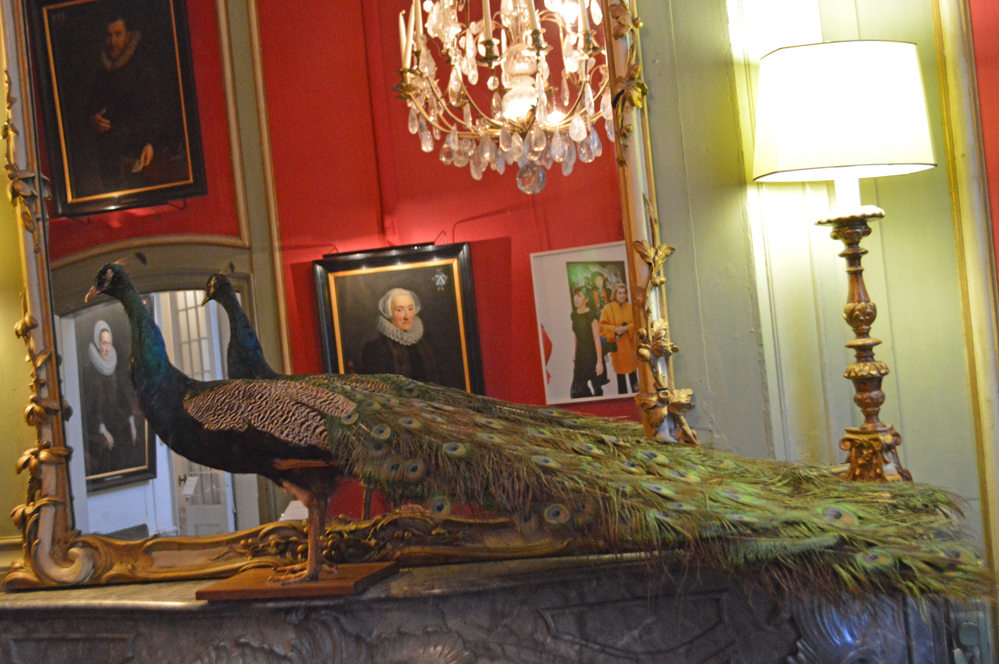
Lila Acheson Wallace, co founder of Reader’s Digest, once quipped, “A painting is like a man. If you can live without it, then there isn’t much point having it.” Since the van Loons bought this sybaritic stretch of Keizersgracht in 1884, they have managed to accumulate 150 portraits, mostly of themselves. Jan Miense Molenaer, the 17th century’s answer to Mario Testino, painted a symbolic van Loon family portrait called The Four Ages or The Five Senses which hangs in the Red Drawing Room. Who could blame them for being vaingloriously proud to have lived here for generations?

Categories
Architecture Town Houses

William Thackeray + Small Villas Dublin

Perfectly Formed

1

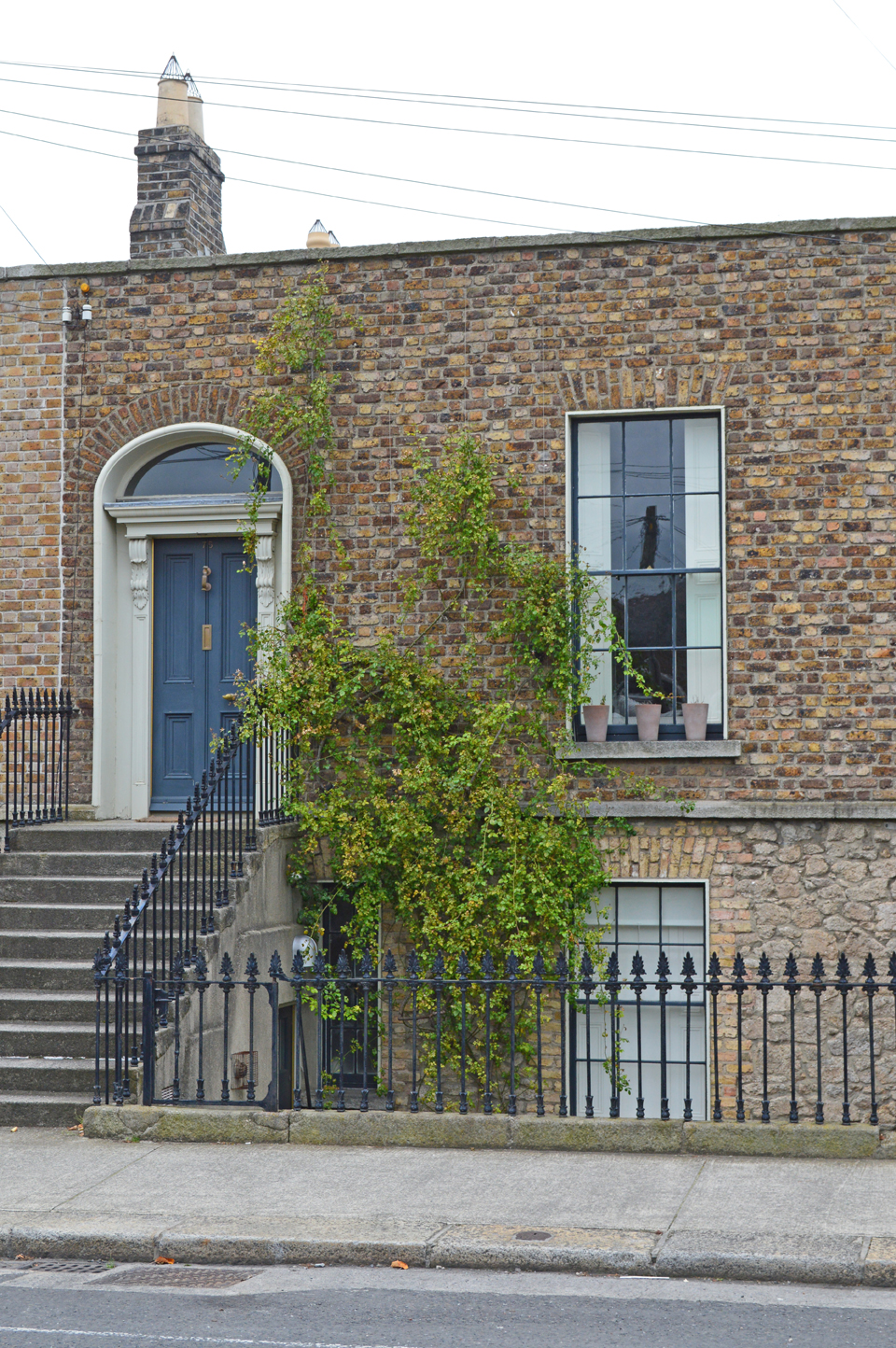
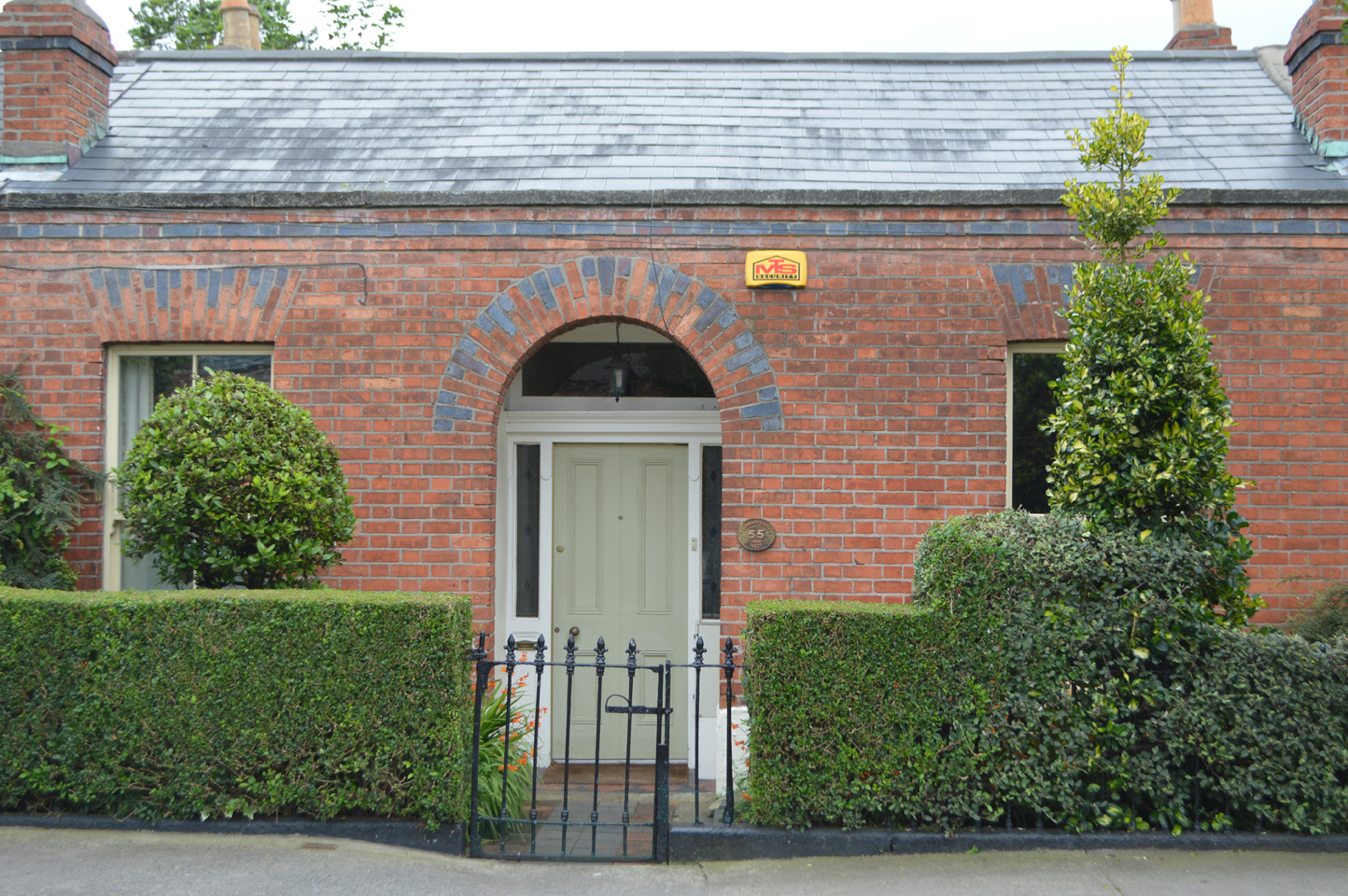
It’s the Tardis effect. Buildings that are larger than they look. Dublin has them aplenty. Perhaps it’s a Franco Irish leftover from Marie-Antoinette’s pining to play at cottage living under the shadow of Versailles. Sir William Chambers’ 1758 Casino Marino, Italian for ‘little house by the sea’, is the Irish capital’s very own Très Petit Trianon.

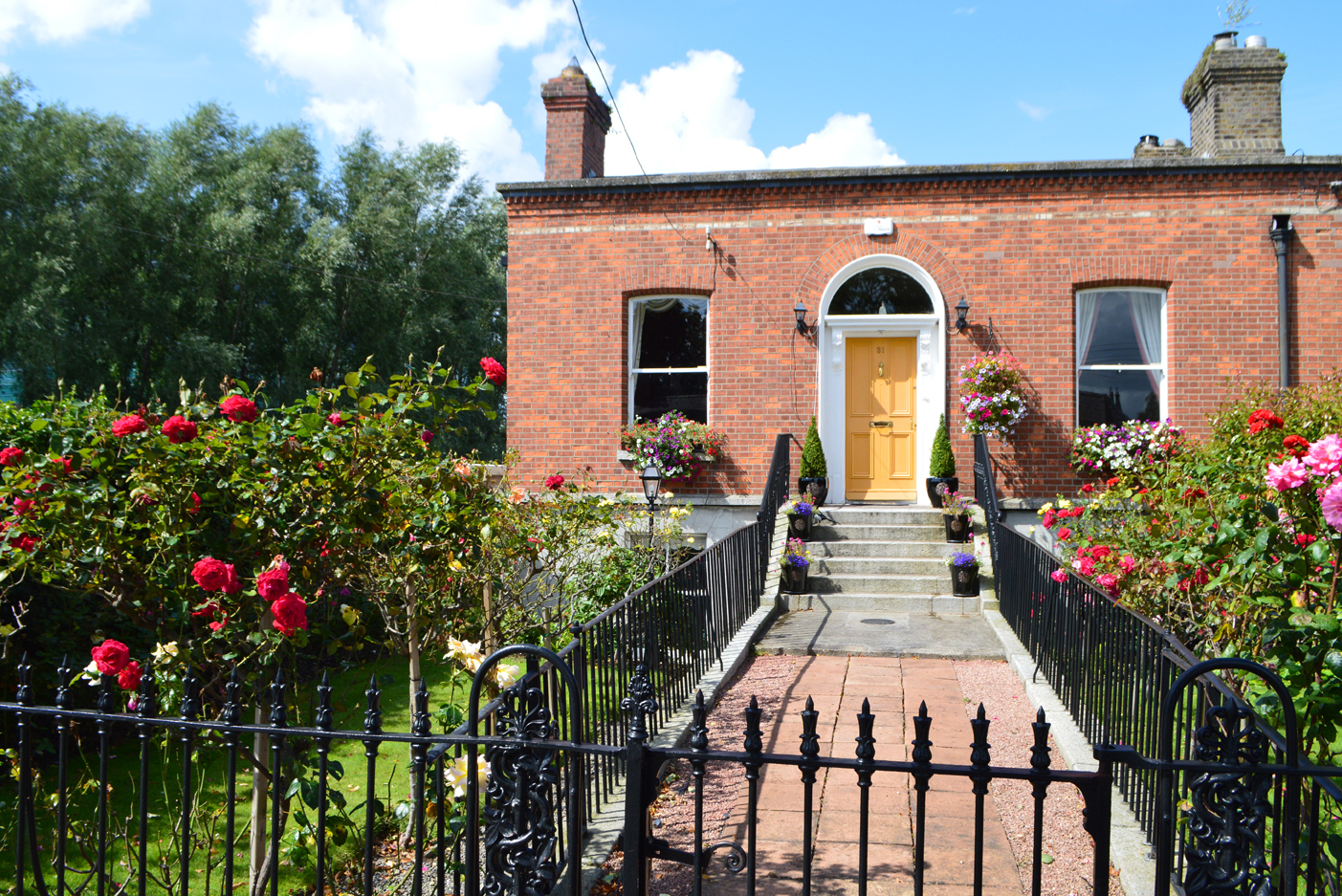
In the 18th and 19th centuries, terraced dwellings with all the appearance of being single storey (ok, some of them actually are) sprung up across the city. Bungalows they ain’t. These are miniature sophisticated architectural gems in the grand manner.

3 Small Dublin Houses lvbmag.com

This low lying building boom really took off when the Dublin to Dún Laoghaire (née Dun Leary née Kingstown) railway was completed in 1834. These little houses were erected – standalone, semi or together – along the coast from Sandymount near the city centre southwards to Monkstown. The closest equivalent English style of the early versions is Regency.

4 Small Dublin Houses lvbmag.com

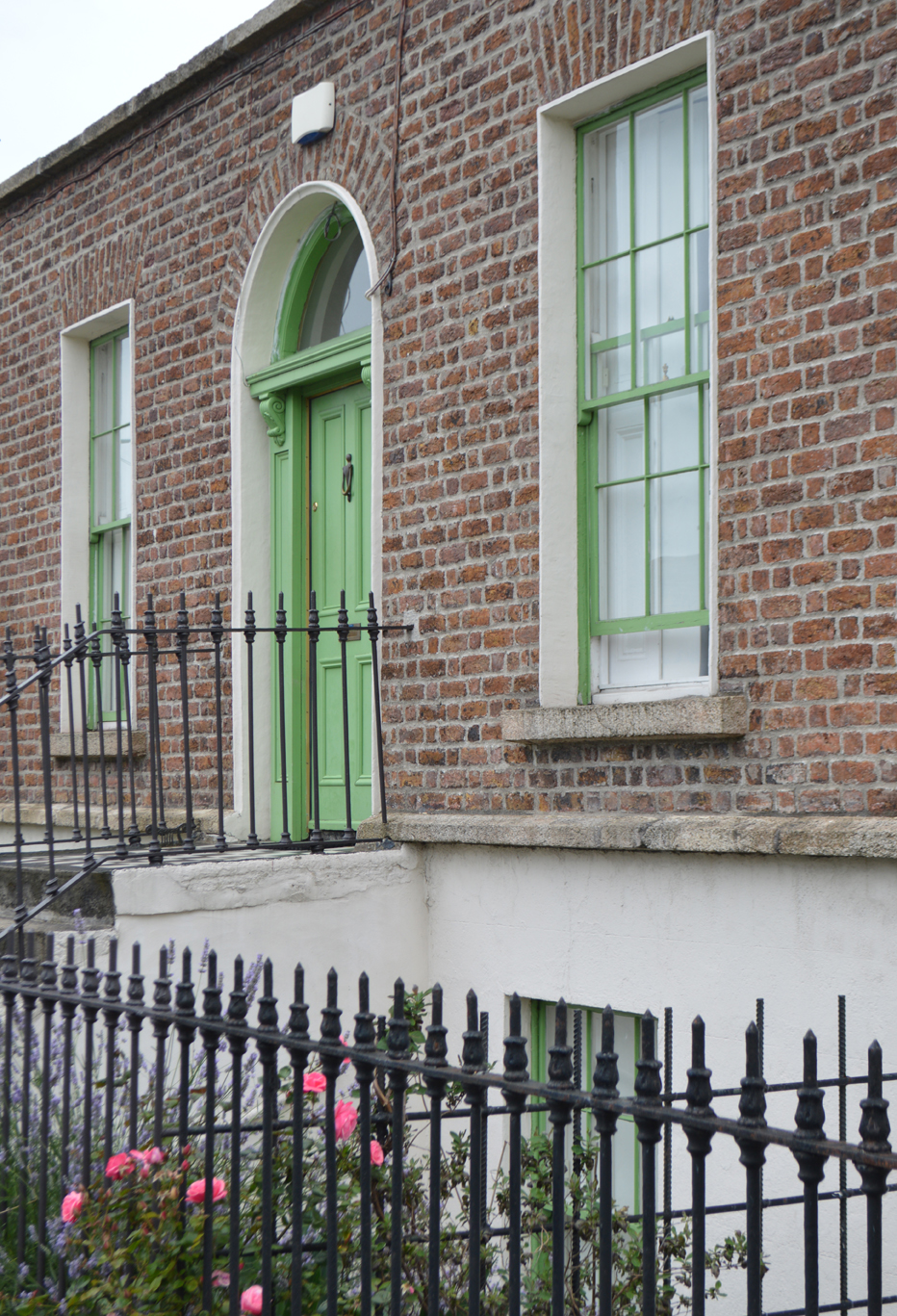
While some are all on one level, most have a flight of eight or so steps leading to a distinguished doorcase. Despite lacking the verticality of the townhouses lining the streets and squares of the city centre, these small houses still boast the typical Dublin doorcase treatment with attached columns separating the central door from sidelights and a half umbrella fanlight overhead. Many are three bay with a tall sash window on either side of the doorcase. Below the door is typically a string course and beneath it the shorter windows of a semi basement continue the lines of the windows above.

9 Small Dublin Houses lvbmag.com

The symmetry and classical proportions of these ‘upside downside’ houses as they are sometimes affectionately called, their main floor raised to piano nobile status, so evocative of French and Italian villas but in maquette form, raise questions about their origins. The Wide Street Commission of 1757, which lent Dublin such lasting gracefulness, could not rid the city of cholera or beggars. Middle class people quickly took advantage as speculators built summer houses or ‘bathing lodges’ along the stops of the new railway line.

Monkstown was one such area of sudden growth. It doesn’t get a mention in Pettigrew and Oulton’s directory of 1834 but a year later was recorded as being well populated. In 1843 Thackeray records in The Irish Sketchbook: “Walking away from the pier and King George’s column, you arrive upon rows after rows of pleasure-houses, wither all Dublin flocks during the summer-time – for every one must have his sea-bathing; and they say that the country houses to the west of the town are empty, or to be had for very small prices, while for those on the coast, especially towards Kingstown, there is the readiest sale at large prices.”

He continues, ‘I have paid frequent visits to one, of which the rent is as great as that of a tolerable London house; and there seem to be others suited to all purses; for instance there are long lines of two-roomed houses, stretching far back and away from the sea, accommodating, doubtless, small commercial men, or small families, or some of those travelling dandies we have just been talking about, and whose costume is so cheap and so splendid.’

The influence of the classical tradition in Ireland is easily traced to Sir William Robinson’s seminal 17th century Royal Hospital Kilmainham. James Gandon and Thomas Ivory flew the flag throughout 18th century Dublin. In the 19th century Francis Johnson, John Skipton Mulvany and the two generations of William Murray kept neoclassicism to the forefront of development. Chambers provided the precedential style of the mini villas; now all that was required was a forerunner in scale.

That comes in the form of an early domestic work by James Gandon. In 1790 he designed Sandymount Park for his friend the landscape painter William Ashford. Like a piece of couture, this house reaches a high standard of splendour which filtered down in a diluted prêt-à-faire fashion to the masses. The three bay symmetrical single storey over raised basement entrance front extends on either side by a blind bay with a niche at piano nobile level. A rectangular pediment (is there such a thing?) surrounded by one helluvan urn is plonked above the central doorcase. A peak round to the side elevation reveals that Sandymount Park is in fact a three storey dwelling: clerestory windows are squeezed under the eaves.

Single storey with or without a basement houses are an Ireland-wide phenomenon. Urban builders may have been inspired by their country counterparts. Gaultier Lodge, County Waterford; The Grove, County Down; and Fisherwick Lodge all express emphatic horizontality, a love of the longitudinal.

A printed source of inspiration can be added to these built form examples. In 1833 John Loudon published his voluminous Encyclopaedia of Cottage, Farm and Villa Architect. On one of its 1,400 pages, he illustrates The Villa of Hanwayfield which is three bays wide by three bays deep over a raised basement. A pitched roof behind a low parapet rises above the symmetrical elevations, similar to Dublin’s little villas. A few months after its publication, Loudon mentioned in two magazines that his doorstop of an Encyclopaedia had been a bestseller in Ireland. This coincided with the development of Dublin Bay.

11 Small Dublin Houses lvbmag.comWhatever the inspiration was, the fad stuck. Towards the end of the 19th century, Portobello in South Dublin was developed on a grid pattern of one and one-and-a-half storey terraced housing. The material (brick) and the fenestration (plate glass) may have been Victorian but the upside downside model ruled.8 Small Dublin Houses lvbmag.comToday, these mini villas of Dublin are much sought after hot property. Larger than life characters like actor Colin Farrell love them – he owns one in Irishtown. But still, a peculiar descriptive term eludes them. Their distant country cousin is a cottage orné. With that in mind, Lavender’s Blue declare ‘cottage grandiose’ as the correct terminology henceforth.7 Small Dublin Houses lvbmag.com

Categories
Architecture Design Developers People Town Houses

Magnus Andersson + Homes by Skanska Cambridge

University Challenge

It’s the city known globally for its university. Not to mention a world leading science park, hospital and biomedical industry which attract la crème de la workforce across Europe. The latest Centre for Cities report states that it has the most highly skilled workforce in the UK. It has the third fastest growing population in the country and one of the highest average earnings.

Little wonder Homes by Skanska chose Cambridge for its first UK residential development. The company launched last November at the Design Museum, appropriately enough. Now the show home at its Cambridge development Seven Acres has just been unveiled. Magnus Andersson is President of Skanska Residential Development UK.

“Skanska has a long tradition of Scandinavian home building,” says Magnus. “We’ve brought the best of it to the UK. High floor to ceiling heights and flexible open plan living are just some of key elements.” All the homes meet Code for Sustainable Homes 4. “One of our homes even meets Code 5!” he states. “It’s been sold already.” Rainwater harvesting and heat recycling take it to the next level.

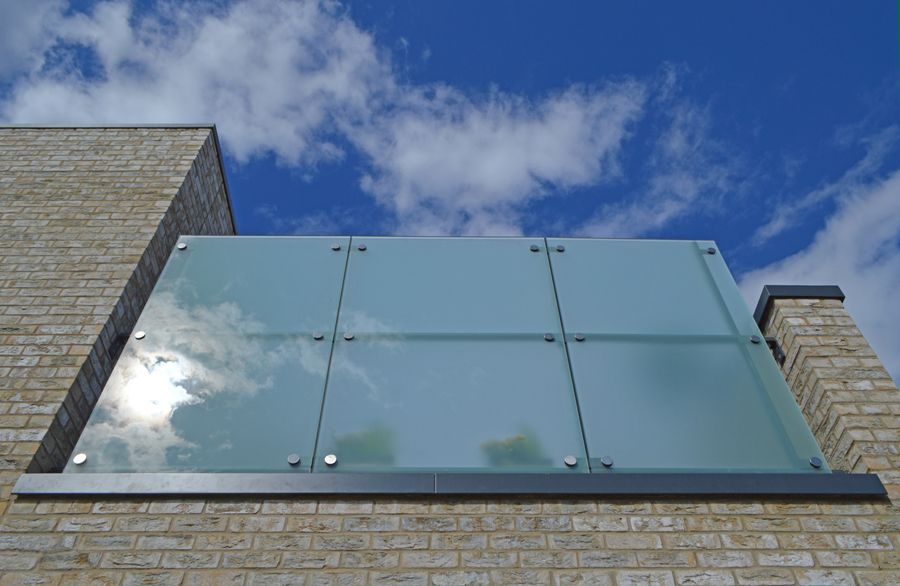
Stewart Baseley, Executive Chairman of the Home Builders Federation, approves. “If this is what Code 4 and Code 5 homes look like, we have little to fear.” Seven Acres is mercifully free of the usual unsightly environmental accretions such as wind turbines. The approach is much more design integrated. Photovoltaic panels are hidden behind low parapets on the flat roofs. Natural light permeates the top floor bathrooms through circular skylights, a clever Victorian idea recycled. Mini allotments are another sustainable feature.

Seven Acres is a mortar board’s throw away from Addenbrooke’s Hospital. A new guided bus corridor connects the two. The hospital is at the centre of the Cambridge Biomedical Campus where 200,000 sqm new laboratories are being developed.” The development forms part of the southern fringe expansion of the university city. An estimated 16,700 new homes are required.

“There is nationwide demand for 250,000 homes per annum,” reports Stewart. “The population is growing older and changing shape. Yet nowhere near enough residential development is taking place. Causes of the shortage of new homes include lack of bank credit and the planning system. Homes by Skanska is a rare new entrant to this challenging housing market.”

Toby Greenhow, Residential Development Director at Savills, knows more than most about the challenging housing market. He explains, “Any development should tick at least two out of three boxes. That’s: be a well known brand; have a recognised location; and sell a traditional product. Seven Acres had none of these!” Skanska may be an international name but hasn’t to date been associated with housebuilding in England. Up until a year ago, Seven Acres was, well, seven acres of farmland. And Formation Architects have ensured the architecture is anything but traditional.

Nonetheless the development is a commercial success. “A professor and his wife who works in academia were two of our first customers,” Magnus confirms. “It’s attracting an educated sophisticated Euro mix,” adds Toby,” and proving very popular with academics and scientists. They are very sustainability aware. It’s not a coincidence that cycling is the most popular mode of transport in Cambridge.”

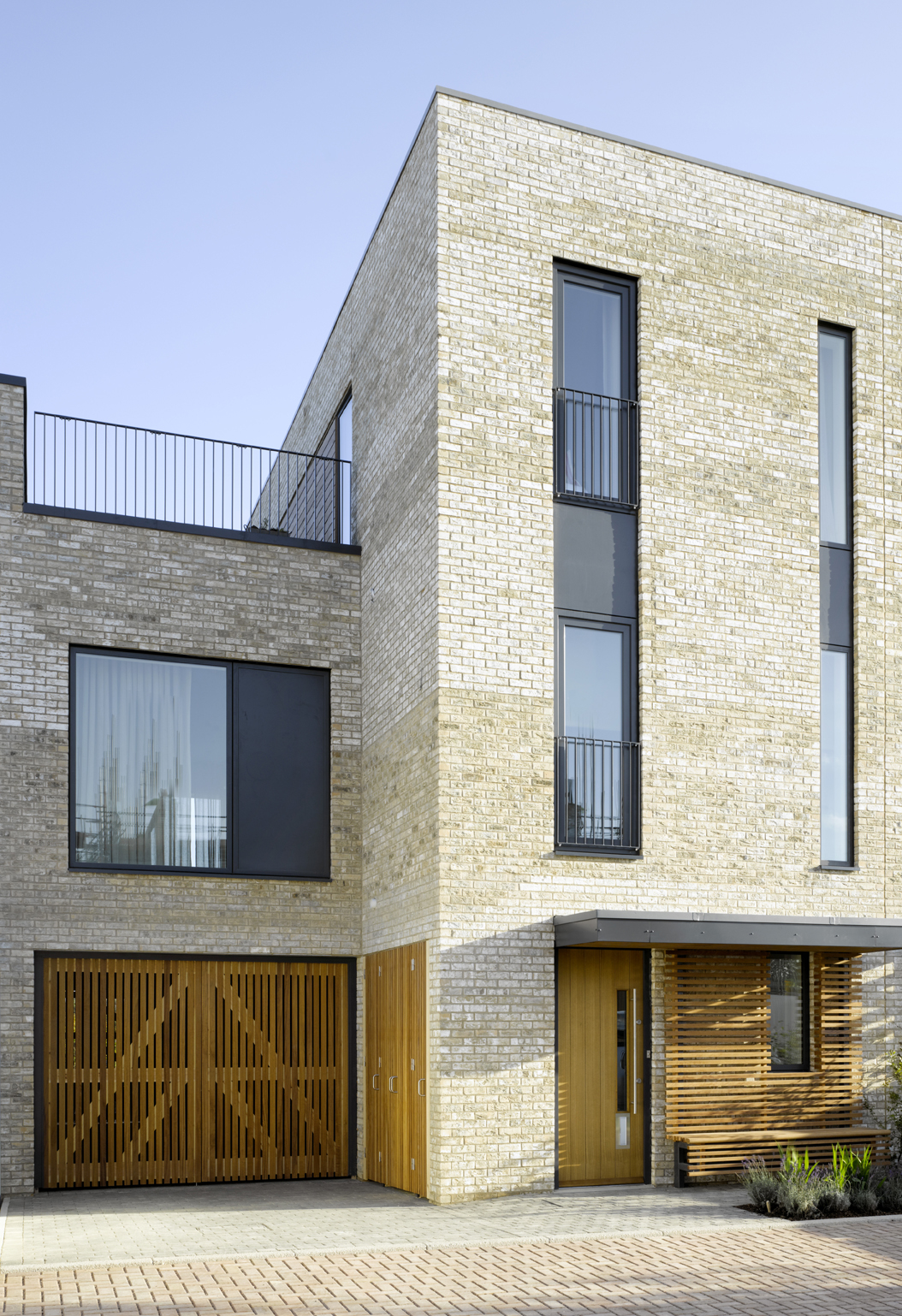
The show home is an end of terrace overlooking a village green type space. It’s faced with pale grey brick reminiscent of the stone architecture forever associated with Cambridge. Homes by Skanska’s trademark full height timber bench stretches elegantly up the front wall. A garage with cycle spaces, natch, is incorporated into the building envelope.

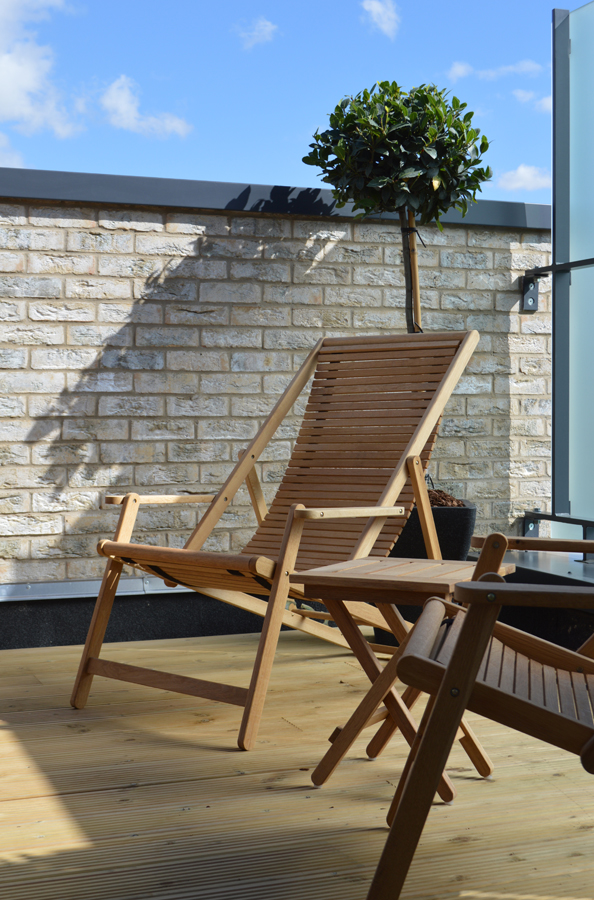
The remainder of the ground floor is occupied on either side of the staircase by a downstairs loo to the front and the combined kitchen and dining area to the rear. Airiness and spaciousness pervade. Spare Scandinavian elegance. Where’s the clutter? It’s not just show home tidiness – storage spaces abound. A door sliding into the thickness of the wall allows for a flow of light and circulation from the glazed entrance door to the patio doors and to the garden beyond.A dual aspect sitting room is located above the garage. A sweep of terrace embraces the full width of the house. Two spacious bedrooms including one en suite are also located on the first floor. The attention to detail is unmissable, from clever lighting insets to an intelligently placed window strip positioned to allow direct views from the bed on lazy Sunday mornings. Full height windows, 2.9 metres tall, meet eco credentials as they are triple glazed. Two more bedrooms are on the top floor. The landing opens onto another expanse of terrace over the sitting room. Homes by Skanska are willing to invest in research and development,” believes Stewart. “They are pioneers, not followers. No doubt by 2016 when the Government’s mandatory low carbon agenda kicks in they will be even further ahead of the game.” Academic par excellence Stephen Hawking believes intelligence is the ability to adapt to change. In that case, the future looks bright for Homes by Skanska.